
Summary
Over 60 Canadian optometrists are now using Health Canada–licensed AI software (CARA by DIAGNOS) to analyze retinal photographs during routine eye exams. This guide explains how the AI assists clinicians in detecting early signs of diabetic retinopathy, age-related macular degeneration, and vascular changes, while outlining coverage, cost considerations, and key questions patients should ask.
A photograph of the back of your eye can reveal trouble long before you notice anything wrong. Now, with more than 60 optometrists across Canada using it for diagnoses, that photograph is getting a new analysis, by a system that is not human.
That system is called CARA, from Quebec company DIAGNOS. In its October 20 announcement, DIAGNOS said the first phase of its Canadian rollout is complete, with 28 stores set up in two weeks, bringing the total to more than 60 optometrists now using CARA. This followed a Health Canada licence granted on July 23, 2026, authorizing commercialization of the system in Canada.
So this is not a research project or a promise about the future. It is already in use. The more interesting question is what it actually does, and what it does not do.
What just arrived in Canadian clinics
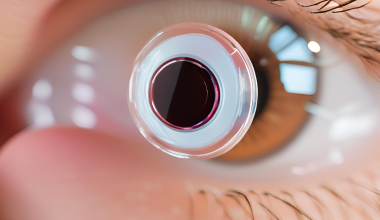
CARA is a software platform, not a new camera. During an eye exam, a photograph is taken of the retina, the light-sensitive layer at the back of the eye. CARA analyzes that image with artificial intelligence and presents its findings to the optometrist.
DIAGNOS describes the system as working within a single clinician-controlled workflow, and says the optometrist remains in full control of every clinical decision. In other words, the AI assists the exam. It does not run it.
What the AI actually looks at
CARA combines several analysis modules, each aimed at a different problem:
Age-related macular degeneration detection, which looks for signs of damage to the macula, the part of the retina responsible for sharp central vision.
Diabetic retinopathy detection, which looks for damage to the tiny blood vessels in the retina caused by diabetes.
Retinal microvascular analysis, which examines those small retinal blood vessels for changes.
Advanced retinal image enhancement, which sharpens the retinal photograph so the clinician can see more in it, plus a workspace where the optometrist reviews and annotates the findings.
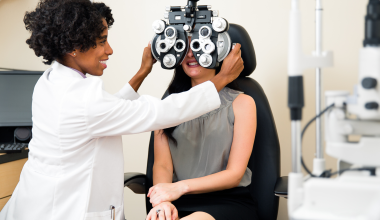
None of this is visible to the patient as a separate event. From the chair, it is still an eye exam. The change happens in how the retinal image is reviewed.
So what does the patient actually get out of this? Nothing about the visit changes. It is the same photograph, taken during the same exam. What changes is what happens to that photograph. CARA’s analysis can surface signs that may not be readily apparent on the image alone, and the optometrist reviews those findings during the exam. If something is flagged, the next step is unchanged: clinical judgment, and a referral where needed. So the benefit is not a faster diagnosis in itself. It is a better chance of catching silent damage at a routine visit, when there is still time to act on it. DIAGNOS says clinics find the assessments faster and more efficient, but it has not published how much time that saves or any patient outcome data, so that part remains the company’s claim, not a measured result.
Is it covered, or an extra cost?
Short answer: do not assume so. DIAGNOS has not published a patient price for CARA, and its announcement says nothing about coverage by a provincial health plan. So whether you pay anything turns on two separate questions: whether your province covers your eye exam at all, and whether the clinic treats the AI analysis as part of that exam or as an add-on.
In Ontario, for example, OHIP covers one major eye exam a year for children and youth 19 and under, and for adults 20 and older with an eligible eye condition such as diabetes or retinal disease. Seniors 65 and older without an eligible condition are covered once every 18 months. Adults 20 to 64 without an eligible condition are not covered for a routine exam. Even where the base exam is covered, clinics often charge separately for retinal imaging beyond that base exam, so the CARA analysis may still carry its own fee, set by the clinic.
That is why the checklist question matters. Before the exam, ask the clinic whether CARA is included in the exam fee or charged separately, and whether your private plan covers it. Until DIAGNOS or clinics publish a price, any number here would be a guess, and this article does not guess.
Why silent damage is the point
The reason this kind of screening matters is that serious eye disease often arrives quietly. Diabetic retinopathy, for example, can damage the retina well before vision changes enough for someone to notice. By the time symptoms show up, damage may already be done.
That is why regular screening is the whole game, with or without AI. Diabetes Canada recommends eye exams every 1 to 2 years upon diagnosis of type 2 diabetes. More generally, the Canadian Association of Optometrists recommends comprehensive eye exams every two to three years for adults aged 20 to 39, every two years for adults aged 40 to 64, and annually for adults 65 and older, with more frequent exams for people with risk factors such as diabetes.
AI does not change that schedule. It is a tool inside the exam, not a reason to delay one.
What it does not do
It is easy to overread a rollout announcement, so a few limits are worth stating plainly.
CARA does not replace the optometrist, and it does not replace a comprehensive eye exam. A finding still needs clinical judgment and, where needed, a referral. The system analyzes images. It does not make the diagnosis on its own.
The announcement also leaves practical questions unanswered. It does not include pricing, a clinic-by-clinic list, or patient outcome data, and this article does not fill those gaps with guesses. Canadians who want to know whether a nearby clinic uses CARA will need to ask the clinic directly.
And while DIAGNOS says it plans to expand to clinics across all Canadian provinces, that expansion is still in the future. Availability will vary by region for some time. DIAGNOS reports positive early feedback from optometrists and clinics, pointing to the interface, the precision of the analysis, and processing speed, but that is company-reported feedback, not an independent evaluation.
What to ask at your next eye exam
If you are curious whether this applies to you, these five questions will get you a straight answer:
- Does your clinic offer AI-assisted retinal screening?
- Is it part of a regular exam or an add-on, and is there an extra cost?
- What happens if the screening flags something?
- Will I still get a full exam and a discussion of the results, not just a printout?
- How often should I be screened, given my own risk factors?
The bottom line is simpler than the technology. A Canadian-built AI system has moved from licence to live use in real clinics, quickly. But the most useful step for most readers has not changed at all. If you have diabetes, or if you are overdue for an eye exam, book the exam. AI might be part of it but it is not a substitute.
Subscribe to The Health Insider newsletter where you’ll find many more insights, delivered straight to your inbox.
~ Read more from The Health Insider ~
- Practical Home Health Gifts That Offer Peace of Mind
 Help loved ones stay safe with 5 home health gifts, from smart thermostats and air purifiers to blood pressure monitors and first aid kits.
- Stress and Mindfulness Gifts That Help You Slow DownHelp loved ones de-stress with 7 mindfulness gifts, from essential oil diffusers and fidget rollers to buckwheat meditation cushions and books.
- Kitchen and Nutrition Gifts That Make Healthy Eating EasierSupport healthy eating in 2026 with 6 editor-approved kitchen tools, from glass meal prep containers to personal blenders and indoor grow kits.
- Give the Gift of Better Sleep: 4 Thoughtful Picks for a More Restful NightHelp loved ones wind down with practical sleep-focused holiday gifts, from white noise machines to eye massagers and mattress toppers.
- Syphilis Was Nearly Gone in Canada. Now Babies Are Being Born With It.Infectious and congenital syphilis rates are surging across Canada. Learn what the PHAC data reveals and key prenatal testing steps to take.
- Editors Choice: Best Self-Care Gift Ideas To Soothe The Mind And BodyDiscover the top self-care gifts in our 2026 Gift Guide. Explore expert picks for stress relief, foot spas, infrared saunas, and muscle recovery.


The information provided on TheHealthInsider.ca is for educational purposes only and does not substitute for professional medical advice. TheHealthInsider.ca advises consulting a medical professional or healthcare provider when seeking medical advice, diagnoses, or treatment. To read about our editorial review process click here.