Summary
A new survey by the Canadian Ophthalmological Society (COS) reveals only one in four Canadians know that diabetes can cause blindness. Experts warn that early detection could prevent up to 90% of vision loss from diabetic retinopathy. Canadians with or at risk for diabetes are urged to book regular eye exams and learn the warning signs of vision changes.
As Diabetes Awareness Month begins, the Canadian Ophthalmological Society (COS) is urging Canadians to take a closer look—literally—at how diabetes affects eye health. A new national survey by the COS found that only one in four Canadians are familiar with diabetic retinopathy, a leading cause of blindness among adults.
“Three in four Canadians are unaware that diabetes can cause vision loss, which puts many individuals at risk,” she explains. “Early detection is critical. It allows eye care professionals to identify retinal changes before significant damage occurs and provide timely treatment. Protecting your vision starts with awareness and action.” – COS President Dr. Mona Dagher.
Awareness lags despite familiarity with other eye diseases
Most Canadians recognize common eye diseases like cataracts and glaucoma, but relatively few have heard of diabetic retinopathy—even though it’s one of the most serious complications of diabetes. Awareness is slightly higher among older adults (27 per cent of those 55 and over) and women (27 per cent compared to 23 per cent of men), but still far too low given the rising rates of diabetes across all age groups.
Early detection could prevent 90% of vision loss
For people living with diabetes, early detection of diabetic retinopathy is everything. According to the COS, up to 90 per cent of vision loss caused by diabetic retinopathy can be prevented with timely diagnosis and treatment. This is because diabetic retinopathy often develops quietly, without any early warning signs.
Many people don’t notice changes in their vision until the damage is already advanced which is why regular, comprehensive eye exams are so important for anyone living with diabetes. Catching the disease early gives eye care professionals the best chance to prevent serious, and sometimes irreversible, vision loss.
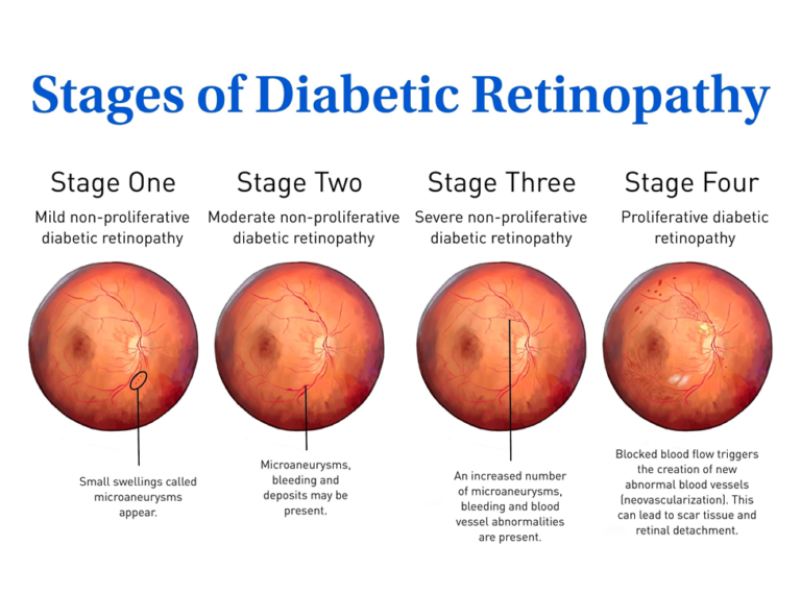
Even though diabetic eye screening programs have been shown to dramatically lower the risk of blindness, the survey shows a worrying gap between how important Canadians think eye care innovation is and how much access they feel they actually have.
While 92 per cent of Canadians say access to advanced eye exams and treatments is important, only 75 per cent believe they actually have that access.
Technology and AI are changing eye care
One way to close the gap is through innovation. Half of Canadians (52 per cent) say they’re open to technologies like artificial intelligence (AI) assisting in eye disease detection—a promising sign, as new AI-supported imaging tools are helping ophthalmologists in Canada spot diabetic eye disease earlier than ever before.
“We’re seeing rapid advances in diagnostic imaging and AI-supported screening,” says Dr. Dagher. “But awareness and access are equally important; Canadians need to know when to get checked and where to go.”
Even in the early stages, diabetic retinopathy may show few or no symptoms. As it progresses, you may notice:
- Blurred or fluctuating vision
- Dark spots, floaters, or empty areas in your field of vision
- Difficulty seeing at night
- Sudden vision loss
If you have diabetes, book a comprehensive eye exam every year with an optometrist, or your ophthalmologist if you are already seeing one, even if your vision seems normal. Contact the Canadian Association of Optometrists to find an eye doctor in or near your community. Call 1 888 263 4676 or visit their website. Early detection is the best defence against vision loss.
Are eye exams for people with diabetes covered by medicare in Canada?
In Canada, coverage for eye exams falls under provincial health plans. People with a confirmed diagnosis of diabetes are generally eligible for an annual comprehensive eye exam covered by their provincial health insurance plan. The specifics may vary slightly by province.
See here for a complete overview of province by province coverage from the Canadian Association of Optometrists.
Make eye exams a habit
During Diabetes Awareness Month, the COS is calling on everyone living with—or at risk for—diabetes to book a comprehensive eye exam. Even if your vision seems fine, regular check-ups can catch early changes long before symptoms appear.
~ Read more from The Health Insider ~
- Top 5 Shock-Absorbing Running Shoes to Protect Your Joints
 SummaryDiscover the best shock-absorbing running shoes to protect your joints and improve recovery. Learn how proper midsole cushioning reduces impact forces on your feet, ankles, and hips during long road runs. Explore top-rated, comfortable footwear options from HOKA, Brooks, ASICS, New Balance, and Saucony for every stride. Running is one of the simplest ways to…
 - Living Near a Golf Course May Raise Your Parkinson’s Risk, Study Finds
 A new study found people living within a mile of a golf course had significantly higher odds of developing Parkinson’s disease. Here’s what it means.
 - IBD Is a Gut Disease. So Why Does It Start Affecting Mental Health Years Before Diagnosis?
 New research shows anxiety and depression often start years before an IBD diagnosis. Learn how chronic gut inflammation affects mental health.
 - Fibroid Relief: New Treatments On The Horizon
 Discover how groundbreaking, non-invasive treatments are restoring hope, preserving organs, and freeing women from life-altering fibroid pain.
 - Canada’s Cigarette Packages Just Got a Lot Harder to Ignore
 Canada has launched new graphic warnings on cigarette packs and individual sticks. Learn how these updated labels aim to reduce smoking rates.
 - Leafy Greens Ranked For Top Health Benefits
 Explore our definitive ranking of Canadian summer greens. Learn the health benefits of local arugula, spinach, chicories & more.
The information provided on TheHealthInsider.ca is for educational purposes only and does not substitute for professional medical advice. TheHealthInsider.ca advises consulting a medical professional or healthcare provider when seeking medical advice, diagnoses, or treatment. To read about our editorial review process click here.