
Summary
A new study from the Fraser Institute says that using AI for small, individual tasks only provides minor benefits. To truly fix healthcare productivity, the entire system—from the doctor's office to the research lab—needs to be redesigned with AI at its center. This could automate everything from scheduling to drug discovery, freeing up doctors to focus on patients.
A new study released today by the Fraser Institute suggests that Canada’s healthcare system is failing to see significant productivity gains from artificial intelligence because it is using the technology as a “patch” rather than a foundation.
The report, How Implementing System-Wide Solutions Can Amplify the Impact of Artificial Intelligence on Health Care, argues that current AI applications, referred to as “point solutions”, only offer marginal improvements.
According to author Avi Goldfarb, the Rotman Chair in Artificial Intelligence and Healthcare at the University of Toronto, true transformation requires a total redesign of how care is delivered.
“Artificial intelligence has the potential to radically transform—and improve—virtually every facet of health care, from discovery, diagnosis and treatment, to administration and research,” says Goldfarb.
The Problem with “Point Solutions”
Currently, AI is often inserted into existing, inefficient workflows. A common example is the AI “scribe,” which transcribes doctor-patient conversations into clinical notes. While this saves time, it does not address the underlying administrative bottlenecks.
The study highlights that for general-purpose technologies like electricity or computing to historically improve productivity, they required the invention of entirely new systems. AI is no different. A “system-wide” solution would see AI handle the entire administrative chain: structuring clinical notes, updating medical records, coordinating with pharmacies, and flagging test results automatically.
Moving Toward “Self-Driving Labs”
The potential for productivity gains extends into medical research and discovery. While many labs currently use machine learning for basic data analysis, the report advocates for “self-driving labs.”
In these environments, AI actively designs, executes, and adapts experiments in real-time. This autonomous approach could drastically accelerate drug discovery and the optimization of treatment protocols by removing the delays inherent in human-led experimental cycles.
Institutional Barriers in the Canadian System
Transitioning to an AI-centered model is particularly difficult within Canada’s publicly funded healthcare framework. The report identifies several key barriers that must be addressed to unlock AI’s potential:
- Professional Boundaries: AI may allow diagnostic and administrative roles to expand beyond physicians, requiring a rethink of traditional medical hierarchies.
- Payment Models: Current physician compensation structures may not incentivize the adoption of high-efficiency AI systems.
- Regulatory Frameworks: Outdated regulations regarding data sharing and institutional structures often block system-wide integration.
The Fraser Institute’s findings indicate that AI’s impact on healthcare will likely mirror the slow-then-rapid adoption of the computer. While progress may feel incremental now, significant improvements in patient care and system productivity will only arrive once healthcare leaders are willing to implement deep, system-level changes to the institutional status quo.
Ultimately, AI is more than a high-tech add-on. Its true value lies in rescuing our strained healthcare system by replacing outdated administrative habits with a modern, system-wide architecture.
Do you see the use of AI in our healthcare system as a promising solution or a frightening prospect?
Subscribe to The Health Insider newsletter where you’ll find many more insights – delivered straight to your inbox.
~ Read more from The Health Insider ~
- Ditching your Sunscreen? Separate Fact From Fiction
 Trading sunscreen for internet rumours exposes your skin to a proven Class 1 carcinogen — the sun. Read the risk analysis and learn about new options before heading outside.
 - Would You Trust AI Over Your Doctor?
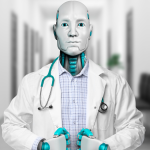 Nearly half of Canadians use AI for medical advice, but 68% would still wait two weeks for a human doctor over an immediate AI diagnosis.
 - Syphilis Is Surging in Ontario and Pregnant Women Are Paying the Price
 Ontario’s syphilis surge has reached every corner of the province. Here’s what pregnant people need to know about screening and protection.
 - Red Light Therapy: Separating Science From Hype
 Beyond the wellness trend lies real clinical proof. Discover how red light therapy physically heals cells, targets chronic pain, and regrows hair.
 - Beyond Ibuprofen: New Tech and Natural Remedies for Period Pain
 Period pain isn’t just something you have to endure. Discover the natural remedies and Health Canada-approved tech that offer proven relief.
 - PCOS Has a New Name and This is Why it Matters
 PCOS is now PMOS (Polyendocrine Metabolic Ovarian Syndrome). Discover why this landmark renaming matters for patient diagnosis and metabolic care.
The information provided on TheHealthInsider.ca is for educational purposes only and does not substitute for professional medical advice. TheHealthInsider.ca advises consulting a medical professional or healthcare provider when seeking medical advice, diagnoses, or treatment. To read about our editorial review process click here.