Article Navigation
Photochemical vs. Photothermal | How It Works | The “Solar Panels” of the Human Body | Vasodilation and Oxygen Delivery | The Evidence Hub | The Right Dose | Who Should Exercise Caution | Availability, Cost, and Canadian Healthcare Realities
I was recently scrolling through Instagram and came upon a post from a friend who has been battling stage 4 breast cancer for about 8 years. Unfortunately, it has spread to her jaw, and to help with the pain, she had turned to red light therapy. For her, it was a great relief.
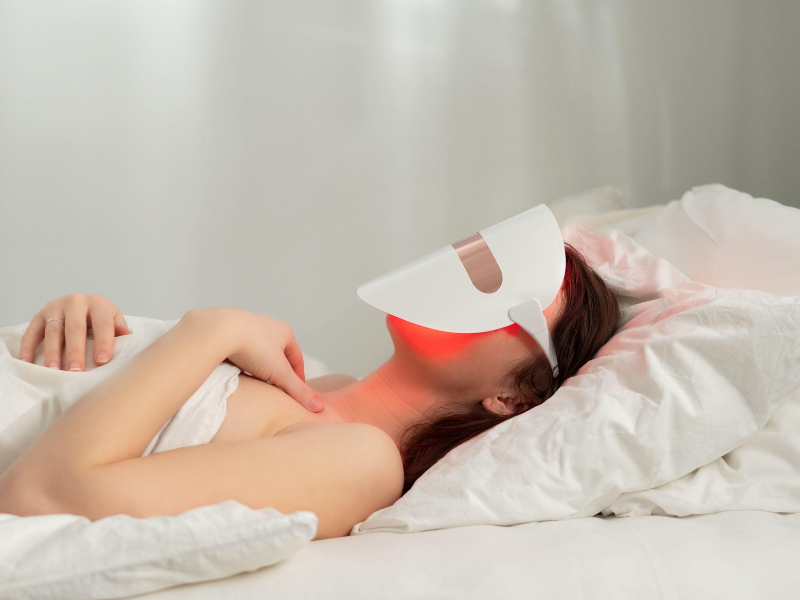
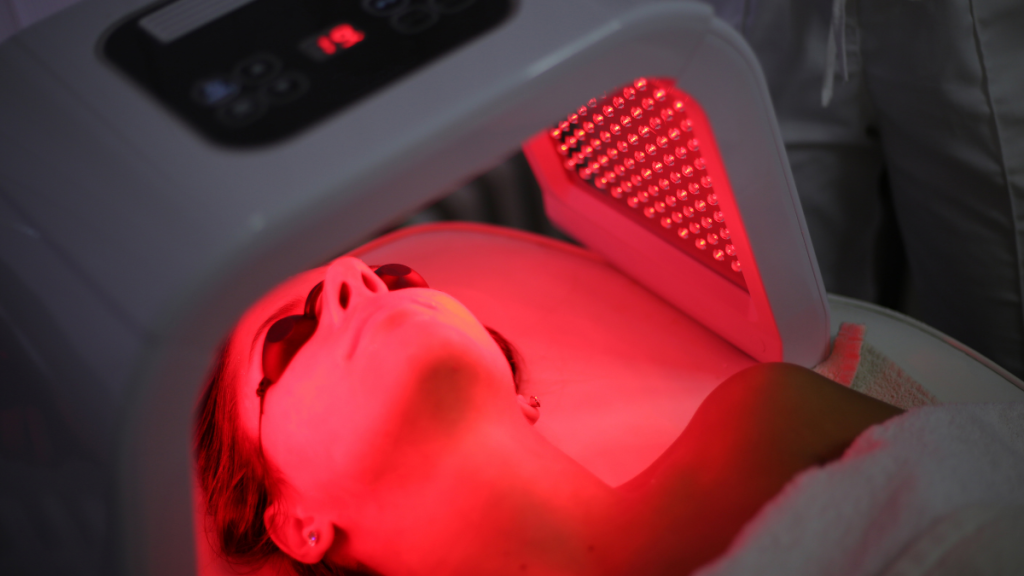
I was surprised and intrigued as I had thought of red light therapy as used primarily for cosmetic purposes, with lots of hype on social media. I mean, those full-face red-light masks look so sci-fi, with people sitting in front of glowing crimson panels or wearing futuristic, illuminated masks.
However, red light therapy (RLT) has officially transitioned from a niche recovery tool for elite athletes to a mainstream wellness staple and in cases such as my friend, a curative therapy with a real scientific basis. Proponents claim it can do everything from erasing fine lines and regrowing hair to soothing jaw pain caused by cancer treatments and even modulating autoimmune thyroid conditions.
But as the market floods with consumer devices and clinical offerings, a massive wave of “spectrum confusion” has followed. Walk into many spas, and you will hear “red light therapy” and “infrared saunas” used interchangeably.
They are not the same. In fact, they are entirely different biological beasts.
To understand how red light therapy works and what it works for, we must first separate the light spectrum into two distinct categories: the light that heals through chemistry, and the light that heals through heat.
The Spectrum Breakdown: Photochemical vs. Photothermal
True red light therapy relies on photobiomodulation (PBM). It is a strictly non-thermal process, meaning it does not rely on heat to change your body. Instead, it uses specific wavelengths of light to trigger a chemical reaction inside your cells.
Within this therapeutic window, there are two primary wavelengths that science cares about:
- Visible Red Light (630–670 nm): This is the bright red glow you can actually see. Because these wavelengths have shorter frequencies, they are absorbed primarily by the superficial layers of the skin, making them the gold standard for surface-level concerns like acne, wound healing, and collagen production.
- Near-Infrared Light (NIR) (810–850 nm): This light is completely invisible to the human eye. Because its wavelengths are longer, NIR can pass deeply through skin and fat layers to penetrate muscles, joints, bones, and deep-seated organs (like the thyroid gland).
While Visible Red and Near-Infrared (NIR) light work quietly at a cellular level to supercharge your body’s energy factories, Mid-Infrared and Far-Infrared wavelengths operate entirely on a photothermal level. They generate deep, therapeutic heat to induce heavy sweating, mimic cardiovascular exercise, and relax stiff muscles. This is the technology powering infrared saunas. You can read more about infrared saunas in our deep dive on saunas found here.
For this guide, we are diving deep into the cool, cellular workings of the Visible Red and NIR spectrum, exploring the hard scientific proof behind what it actually treats, how it alters cellular function, and what Canadians can expect regarding clinical availability and cost.
How It Works: The Mitochondrial “Power-Up”
To understand how a beam of light can with jaw pain due to cancer treatments or stimulate a dormant hair follicle, we have to look past our skin and peer directly inside our cells.
Some of us may remember a basic fact from high school biology: mitochondria are the powerhouses of the cell. Think of them as tiny cellular power plants responsible for producing the energy your body needs to function, heal, and regenerate.
When your cells are stressed due to aging, injury, illness, or chronic inflammation, these microscopic power plants slow down. Red light therapy acts like a wireless charging pad for those sluggish cells.
The “Solar Panels” of the Human Body
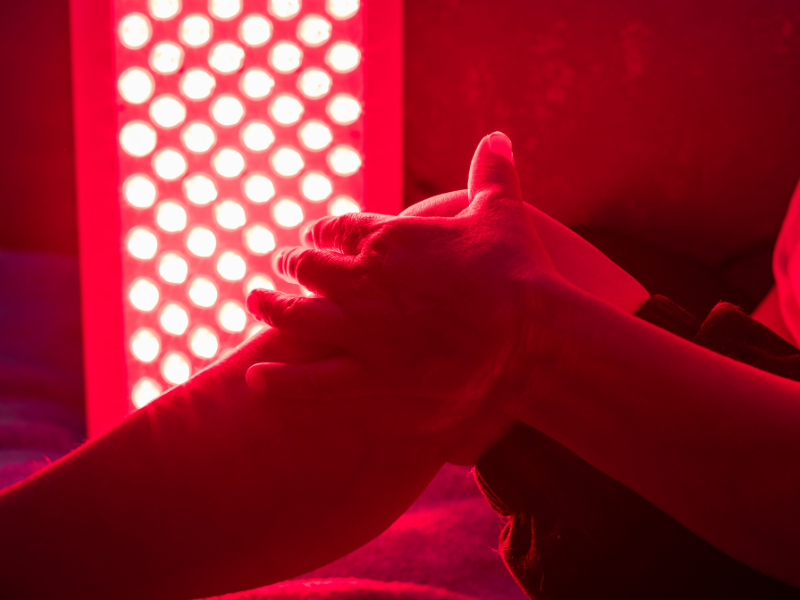
Plants use photosynthesis to convert sunlight into food. While humans can’t turn sunlight into fuel, our cells have a remarkably similar mechanism called photobiomodulation.
Inside your mitochondria sits a specialized, light-sensitive protein called Cytochrome c oxidase (CCO). You can think of CCO as a tiny, biological solar panel.
When you expose your body to the correct wavelengths of Visible Red or Near-Infrared (NIR) light, these “solar panels” absorb the light photons. This absorption kicks off a beautiful chain reaction:
- The ATP Boost (Cellular Fuel): The primary result of this light absorption is an immediate increase in the production of Adenosine Triphosphate (ATP). ATP is the universal energy currency of your body. When a cell has an abundance of ATP, it has the fuel it needs to repair damage, replicate, and fight off inflammation much faster than it could on its own.
- The Nitric Oxide Eviction: When cells are stressed or inflamed, they produce a molecule called nitric oxide that binds to our cellular solar panels (CCO), effectively blocking oxygen and shutting down energy production. The photons from red and NIR light gently kick the nitric oxide out of the way. This allows oxygen to rush back into the cell, turning the power plant back on.
Vasodilation and Oxygen Delivery
The benefits of red light therapy aren’t just contained inside a single cell; they ripple outward into your bloodstream.
When red and NIR light displace that nitric oxide from your cells, the molecule enters your local bloodstream. Nitric oxide is a potent vasodilator, meaning it signals the smooth muscles surrounding your blood vessels to relax and widen.
According to recent research from Stanford Medicine, this widening of blood vessels is a crucial mechanism behind the therapy’s success.
When your blood vessels dilate, local circulation spikes. This creates a highly efficient delivery system that rushes fresh oxygen and vital nutrients directly to the treated area, whether that is a starving hair follicle on your scalp or a strained muscle in your lower back. Simultaneously, this increased flow acts like a waste management system, flushing out toxic, inflammatory fluids that cause pain and stiffness.
By combining an internal energy boost (ATP) with increased blood flow, red light therapy may give the human body the tools it needs to accelerate its own natural healing processes in some cases. Let’s review.
Clinical Use Cases: The Evidence Hub
With so many wellness trends making bold claims, it is vital to separate marketing hype from clinical reality. Red light and near-infrared (NIR) therapy are backed by a rapidly growing body of peer-reviewed research in specific use cases.
Because we are focusing strictly on the non-thermal, cellular benefits of the Red/NIR spectrum, clinical applications generally fall into areas where tissue regeneration, inflammation reduction, and increased blood circulation are required. Here is a breakdown of the four most robust, scientifically proven use cases.
1. Hair Regeneration (Androgenetic Alopecia)
For those experiencing thinning hair or pattern baldness, red light therapy may offer a non-invasive alternative to topical chemicals or prescription drugs.
- The Evidence: According to clinical insights published by Stanford Medicine, hair loss is one of the most robustly proven areas for RLT application.
- How it works: NIR wavelengths easily penetrate the scalp to reach the base of the hair follicle. By triggering vasodilation (the widening of blood vessels), the therapy mimics the effects of hair-growth medications like Minoxidil, flooding the starving hair roots with oxygen and nutrients to shift them from a resting phase back into an active growth phase.
- The Catch: Stanford researchers emphasize that consistency is key; treatments must be maintained for several months to notice a visible increase in hair density and shaft thickness. However, because red light therapy energizes hair follicles rather than permanently altering them, your hair will eventually return to its original state once you stop treatment
2. Autoimmune Support: Hashimoto’s Thyroiditis
Hashimoto’s is an autoimmune disorder where the immune system mistakenly attacks the thyroid gland, leading to hypothyroidism. Emerging research suggests RLT may help calm this internal attack.
- The Evidence: A clinical trial featured in the Journal of Personalized Medicine evaluated the use of 830nm NIR light applied directly to the thyroid gland twice weekly.
- The Findings: Patients in the active treatment group experienced a drop in chronic thyroid antibodies (Anti-TPO and Anti-TG), with some dropping by as much as 850 points over three months. Furthermore, the therapy improved the thyroid’s ability to convert and produce hormones, allowing up to half of the study’s participants to safely reduce their daily thyroid medication (Levothyroxine) under medical supervision.
- The Caution: While the research (here are a couple of other studies) is promising, much of the existing clinical data comes from small sample sizes. Because the thyroid is a sensitive organ, it is strongly recommended that you consult with your endocrinologist or primary care physician before adding light therapy to your treatment plan.
3. Skin Health & Advanced Scar Healing
Because visible red light perfectly targets the epidermis (the outermost layer of skin), dermatologists may offer it in their clinics for some skin conditions.
- The Evidence: Clinical data from Stanford Medicine and independent scoping reviews confirm that RLT accelerates the skin’s natural repair cycle.
- The Findings:
- Anti-Aging: It stimulates fibroblasts to gently ramp up collagen and elastin production, softening fine lines.
- Acne: It calms the angry, red inflammation associated with breakouts (and works even better when paired with bacteria-killing blue light).
- Scarring and wound healing: Studies show that post-surgical and burn scars treated with RLT heal cleanly, properly flattening out and fading in half the time compared to untreated skin.
4. Oral Mucositis & Cancer Treatment Support
Cancer treatments like chemotherapy and radiation often cause severe, painful mouth sores and debilitating jaw inflammation, making it difficult for patients to swallow, speak, or eat. Low-level light therapy is globally recognized as an effective, first-line medical intervention for managing pain and inflammation from oral mucositis
- The Evidence: A 2021 comprehensive review published in Frontiers in Oncologyestablishes red light therapy as a highly recognized, effective medical intervention for managing these exact complications.
- How it works: By delivering light energy directly to the delicate tissues of the mouth and jaw, photobiomodulation increases cellular energy (ATP) and rapidly shuts down inflammatory pathways. Crucially, it achieves this pain relief and accelerated tissue repair without heating the sensitive, compromised tissue, making it safe for patients with raw, irradiated skin.
- The Findings: Clinical guidelines now widely recommend RLT as a preventive and therapeutic tool to significantly reduce the severity of oral mucositis, alleviate jaw pain, and prevent treatment interruptions for head and neck cancer patients.
While international clinical guidelines actively recommend RLT protocols for HNC patients, adoption into routine practice across Canada varies. If you are currently undergoing radiation or chemotherapy, it is highly recommended to speak with your oncology team. They can evaluate suitability based on your case and help integrate a safe, evidence-based RLT protocol into your care plan.
5. Allergic Rhinitis & Seasonal Allergies (Hay Fever)
For millions of Canadians who suffer from persistent sneezing, runny noses, and itchy eyes, seasonal or perennial allergies are an exhausting annual battle. Red light nasal therapy (rhinophototherapy) shows promise for relieving nasal inflammation, but scientific consensus on its effectiveness is mixed. While studies show it can temporarily ease allergic rhinitis symptoms, evidence is limited, and many experts call for larger trials to confirm long-term benefits.
Why the Right Dose is Everything
One of the main reasons people experience such wildly different results with red light therapy comes down to a single factor: precise dosing.
Photobiomodulation is not as simple as shining a random red bulb and hoping for the best. For the therapy to work, the power density and the total energy delivered to your cells must fall within a very specific, scientifically proven window.
This is governed by a medical principle known as the biphasic dose response: if the dose is too weak, your cells won’t react at all; but if the dose is too intense, it can actually overload the cells and completely cancel out the beneficial healing response.
Finding that “sweet spot” depends entirely on what you are trying to treat. Because light loses energy as it travels through the human body, deeper targets such as a swollen jaw joint or an underactive thyroid gland require a much higher intensity and a longer exposure time to ensure enough photons actually reach the tissue.
Conversely, superficial targets like surface wrinkles or acne require a much gentler dose. Ultimately, what truly determines your success is uniform light coverage and exact, targeted dosing.
Who Should Exercise Caution?
While RLT appears to be safe and virtually free of side effects, it is not a blanket fix for everyone.
Clinical Precautions & Contraindications
- Active cancer sites: While PBM is highly recommended specifically to treat oral mucositis caused by cancer therapies, patients should never shine a red or NIR light device directly onto an active malignant tumor unless explicitly instructed by an oncologist.
- The ocular warning: Despite promising research from the American Academy of Ophthalmology regarding aging retinas, never look directly into high-powered, consumer-grade home panels. Therapeutic ocular treatments utilize very specific, low-intensity, diffuse light in controlled settings. Flooding the eye with an unshielded, industrial-strength home panel can cause retinal damage.
- Photosensitizing medications: If you are taking drugs that make your skin highly sensitive to light (such as certain antibiotics, Accutane, or specific topical retinoids), consult your physician before initiating therapy.
- Darker skin types: People with Fitzpatrick IV to VI skin tones should discuss with their dermatologist before proceeding, as pigmentation changes are possible.
- Pregnant women: Doctors usually recommend pausing the therapy, especially over the abdomen and during the first trimester.
- Skin: Anyone with suspicious moles or lesions should see a dermatologist before using red light therapy.
Availability, Cost, and Canadian Healthcare Realities
When it comes to accessing red light therapy in Canada, consumers have two distinct routes: professional, clinical settings or at-home consumer devices.
Clinical Treatments vs. At-Home Panels
- Professional Clinics: RLT is widely available across Canada in physiotherapy clinics, chiropractic offices, specialized biological dental offices, and medical spas. Clinical devices typically utilize higher-powered lasers or medical-grade LED arrays capable of delivering targeted wavelengths rapidly.
- At-Home Devices: The market has exploded with consumer-facing options, ranging from flexible LED face masks (like Omnilux or Dr. Dennis Gross) and targeted hair growth helmets (like iRestore) to full-body modular LED panels (like Mito Red Light or Hooga).
While convenient for daily adherence, these consumer devices generally feature lower power densities than clinical machines. Speak with your doctor about which would work best for your needs.
The Financial Breakdown (CAD):
- Single Clinical Session: Expect to pay between $75 and $250 per session, depending on whether you are getting a quick dermatological light bath or targeted, physician-led therapy for chronic conditions.
- Specialized Multi-Week Protocols: For advanced protocols like treatment for Oral Mucositis or structured physical therapy, comprehensive clinical plans can range from $1,500 to over $4,000 for a full course of treatment.
- At-Home Device Investment: A quality, clinically validated consumer mask or small tabletop panel typically costs between $300 and $800. Large, medical-grade, full-body panels can easily scale upwards of $1,500 to $3,500.
Is red light therapy covered by provincial medicare? The short answer for the vast majority of Canadians is no. Provincial health insurance plans such as OHIP (Ontario), BC MSP, and RAMQ (Quebec) do not offer blanket coverage for red light therapy or photobiomodulation.
Because provincial medicare frameworks are tightly bound by the definition of “medically necessary hospital and physician services,” alternative, elective, or adjunctive modalities are generally excluded. If you visit a private medical spa for skin rejuvenation or use an intranasal red-light probe for seasonal allergies, the cost is entirely out-of-pocket.
If red light therapy is administered as a small part of a broader, standard treatment plan by a Licensed Physiotherapist, Chiropractor, or Registered Massage Therapist (RMT), the session is billed under that professional’s designation. While Medicare does not cover routine treatments by these professionals, private health insurance or a Healthcare Spending Account may. Check with your provider before proceeding.
Subscribe to the Health Insider for more evidence-based updates about new life-changing therapies.
~ Read more from The Health Insider ~
- Good News for Coffee Lovers: Science Says Your Daily Cup Is Probably Doing You Good
 Is your daily coffee good for your health? Discover what recent research says about mortality, heart health, and how much coffee you should drink.
 - Top 5 Shock-Absorbing Running Shoes to Protect Your Joints
 SummaryDiscover the best shock-absorbing running shoes to protect your joints and improve recovery. Learn how proper midsole cushioning reduces impact forces on your feet, ankles, and hips during long road runs. Explore top-rated, comfortable footwear options from HOKA, Brooks, ASICS, New Balance, and Saucony for every stride. Running is one of the simplest ways to…
 - Living Near a Golf Course May Raise Your Parkinson’s Risk, Study Finds
 A new study found people living within a mile of a golf course had significantly higher odds of developing Parkinson’s disease. Here’s what it means.
 - IBD Is a Gut Disease. So Why Does It Start Affecting Mental Health Years Before Diagnosis?
 New research shows anxiety and depression often start years before an IBD diagnosis. Learn how chronic gut inflammation affects mental health.
 - Fibroid Relief: New Treatments On The Horizon
 Discover how groundbreaking, non-invasive treatments are restoring hope, preserving organs, and freeing women from life-altering fibroid pain.
 - Canada’s Cigarette Packages Just Got a Lot Harder to Ignore
 Canada has launched new graphic warnings on cigarette packs and individual sticks. Learn how these updated labels aim to reduce smoking rates.
The information provided on TheHealthInsider.ca is for educational purposes only and does not substitute for professional medical advice. TheHealthInsider.ca advises consulting a medical professional or healthcare provider when seeking medical advice, diagnoses, or treatment. To read about our editorial review process click here.