
Summary
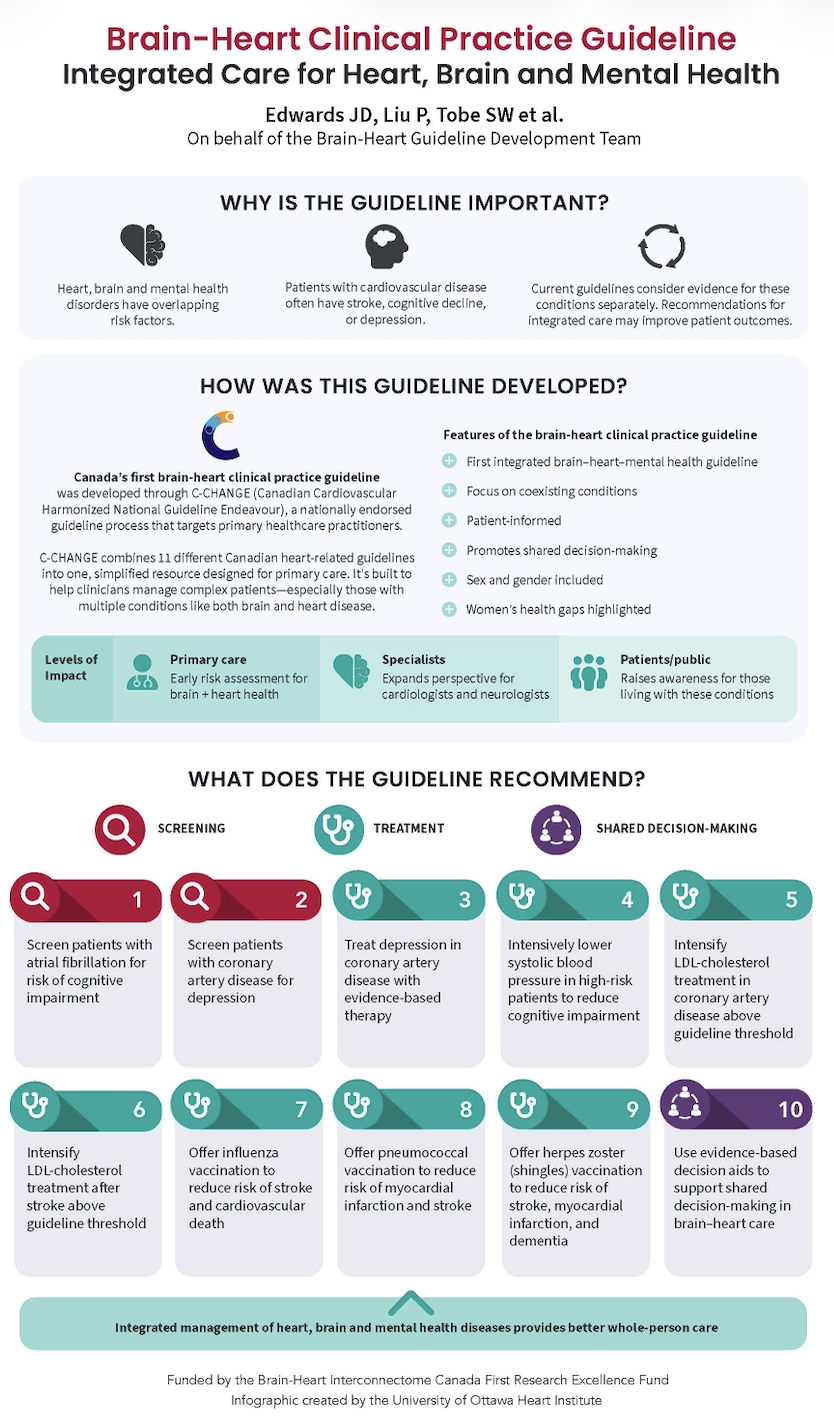
Canada's first brain–heart clinical practice guideline, led by Dr. Jodi Edwards at the University of Ottawa Heart Institute, is calling on doctors to stop treating heart, brain, and mental health conditions in isolation. Published in the CMAJ, the guideline brings together evidence from cardiology, neurology, and mental health to offer 10 practical recommendations for clinicians and patients. This marks a major shift toward whole-person care for chronic disease.
A new Canadian guideline is calling for a whole-body approach to chronic disease
If you have heart disease, your doctor should probably be asking about your memory. And if you’ve had a stroke, your cholesterol needs attention too. That’s the message behind a landmark new guideline published this week in the Canadian Medical Association Journal. It’s the first of its kind to treat the heart, brain, and mental health as the interconnected system they truly are.
Led by researchers at the University of Ottawa Heart Institute, the brain–heart guideline is the first to combine evidence from cardiology, neurology, and mental health to guide care for people living with both heart and brain conditions. It’s a shift that has been a long time coming.
Dr. Jodi Edwards, director of the Brain and Heart Nexus Research Program at the Ottawa Heart Institute and lead author of the guideline, says the work was driven by a growing recognition of the critical connections between heart and brain disease. Particularly as a source of multiple chronic conditions in aging populations.
And the science backs her up. Heart and brain conditions frequently co-occur, sharing overlapping risk factors, underlying biological processes, and even genetic connections. Having one raises your odds of developing the other.
A person with atrial fibrillation faces elevated risk of cognitive decline. Someone who has survived a stroke is more vulnerable to a future heart attack. Depression and coronary artery disease often travel together.
Yet for years, specialists have been treating each of these conditions in isolation, a siloed approach that the new guideline argues is no longer good enough.
The guideline puts forward 10 concrete recommendations for doctors and patients alike. Among the most actionable:
- Atrial fibrillation patients should be screened for early signs of cognitive decline
- Coronary artery disease patients should be assessed and treated for depression
- Blood pressure and cholesterol should be managed aggressively to protect both heart and brain function
- Adults 65+ should stay current on flu, pneumonia, and shingles vaccines, which can meaningfully reduce the risk of stroke, heart attack, and vascular cognitive impairment
Notably, the guideline embedded patient perspectives throughout its development, and every recommendation includes sex- and gender-based considerations. It’s an acknowledgment that these conditions don’t present or progress the same way in everyone, and that women in particular have historically been underserved by research in this space.
The takeaway for patients is straightforward: don’t accept fragmented care. If you’re managing a heart condition, ask your doctor whether your brain health is being monitored.
If you’ve had a neurological event, make sure your cardiovascular risk factors are on someone’s radar. The goal is to screen and treat the whole person, not just individual diseases one at a time.
Your body already knows your heart and brain are connected. Now, medicine is catching up.
Subscribe to The Health Insider newsletter where you’ll find many more insights – delivered straight to your inbox.
~ Read more from The Health Insider ~
- Ditching your Sunscreen? Separate Fact From Fiction
 Trading sunscreen for internet rumours exposes your skin to a proven Class 1 carcinogen — the sun. Read the risk analysis and learn about new options before heading outside.
 - Would You Trust AI Over Your Doctor?
 Nearly half of Canadians use AI for medical advice, but 68% would still wait two weeks for a human doctor over an immediate AI diagnosis.
 - Syphilis Is Surging in Ontario and Pregnant Women Are Paying the Price
 Ontario’s syphilis surge has reached every corner of the province. Here’s what pregnant people need to know about screening and protection.
 - Red Light Therapy: Separating Science From Hype
 Beyond the wellness trend lies real clinical proof. Discover how red light therapy physically heals cells, targets chronic pain, and regrows hair.
 - Beyond Ibuprofen: New Tech and Natural Remedies for Period Pain
 Period pain isn’t just something you have to endure. Discover the natural remedies and Health Canada-approved tech that offer proven relief.
 - PCOS Has a New Name and This is Why it Matters
 PCOS is now PMOS (Polyendocrine Metabolic Ovarian Syndrome). Discover why this landmark renaming matters for patient diagnosis and metabolic care.
The information provided on TheHealthInsider.ca is for educational purposes only and does not substitute for professional medical advice. TheHealthInsider.ca advises consulting a medical professional or healthcare provider when seeking medical advice, diagnoses, or treatment. To read about our editorial review process click here.