Summary
An evidence-based overview of honey's health benefits, comparing raw versus processed varieties and distinct floral sources like buckwheat and Manuka. Explores ancient medicinal uses, hospital wound-healing applications, ideal daily intake, safety precautions for infants, and simple ways to enjoy raw honey naturally.
If you’ve visited a local farmers’ market across Canada recently, you’ve likely seen rows of glowing jars glittering under the sun filled with delicious looking honey. From the wildflower fields of Ontario and Quebec to the clover pastures of the Prairies and the rich coastal blooms of British Columbia, local beekeepers are harvesting some of the finest bee elixirs in the world.
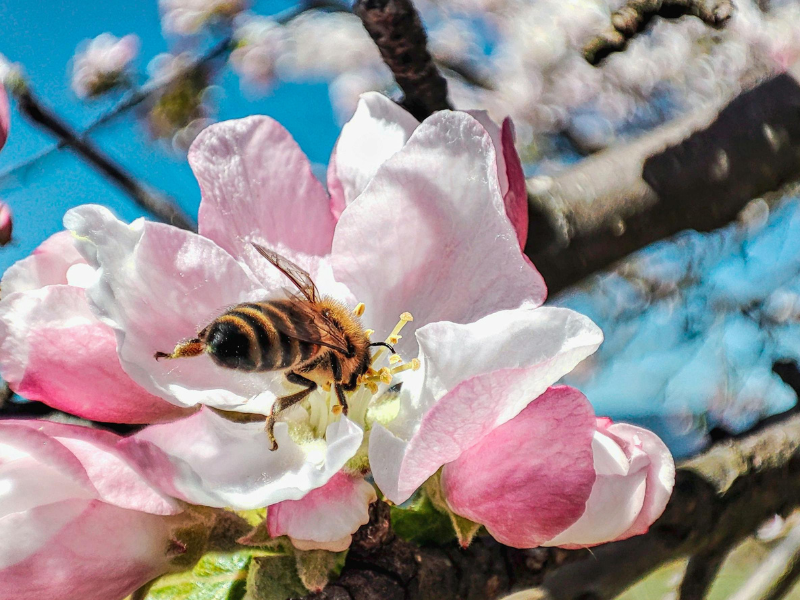
While honey is celebrated today as a natural alternative to refined sugar, its reputation as a healing substance is far from new. According to the Honey Bee Research Centre at the University of Guelph, humans have been harvesting honey since prehistoric times. Ancient humans hunted for honey and harvested honeycomb from beehives, while more modern humans figured out beekeeping from about 1500 onwards.
Ancient Egyptian physicians applied honey to combat skin infections, Sumerian tablets referenced it in medical prescriptions, and traditional Ayurvedic medicine prized it (and continue to do so today) as a balancing tonic.
Today, modern medical research is validating what ancient civilizations knew intuitively: honey is much more than a sweet treat; it is a potent bio-active substance.
Raw vs. Pure vs. Processed: What Kind is Best?
To gain the therapeutic benefits of honey, the kind of honey you purchase matters significantly.
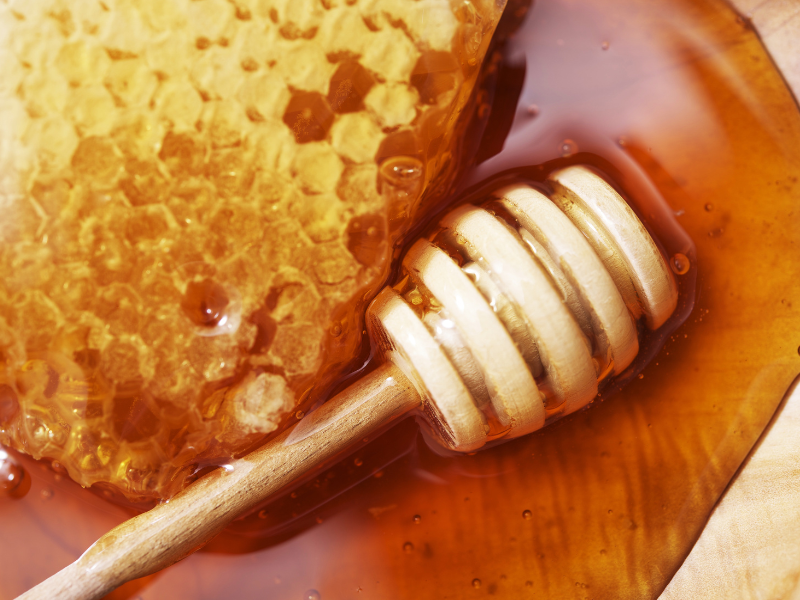
- Raw Honey: This is honey taken straight from the hive, gently strained to remove large wax debris, but never pasteurized (high heat processed) or ultra-filtered. Raw honey retains its natural bee pollen, propolis, live enzymes, and polyphenols (antioxidants). It often looks cloudy or crystallizes quickly, which is a hallmark of quality, not spoilage.
- Pure Honey: This simply means the product contains 100% honey without added glucose, corn syrup, or flavorings. However, “pure” honey may still be pasteurized and heat filtered.
- Processed / Commercial Honey: Heated to high temperatures to prevent crystallization and filtered to remove pollen for clarity and longer shelf-life. High heat destroys temperature-sensitive enzymes (like glucose oxidase) and reduces antioxidant content.
For maximum health benefits, always opt for raw, unpasteurized honey, ideally sourced from local beekeepers where purity and minimal processing are guaranteed.
Not All Honey Is Created Equal
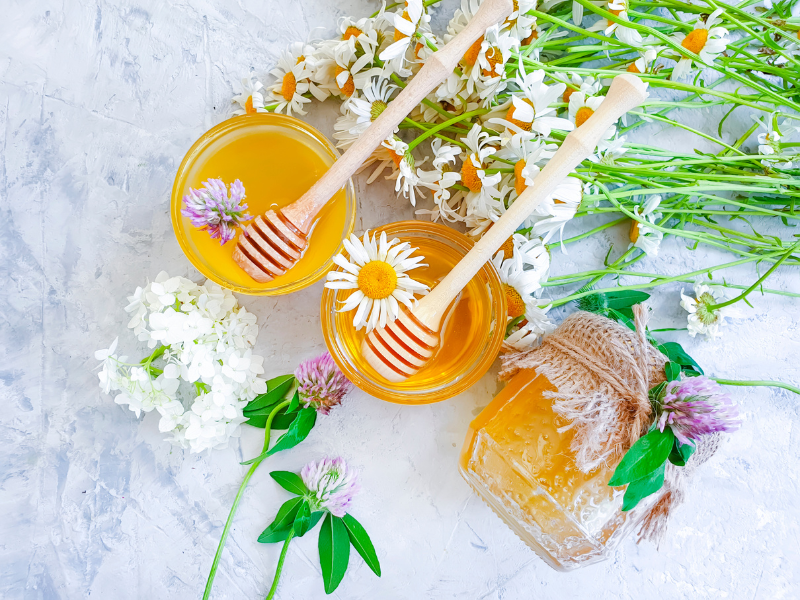
Imagine walking through a sun-drenched meadow at dawn, where delicate droplets of dew cling to petals of white clover, deep purple lavender, and wild goldenrod. The air is still, filled with the soft, steady hum of honeybees moving gracefully from bloom to bloom, each visit capturing a fleeting moment of the landscape’s unique essence. Honey can come from so many different botanical sources, all of them beautiful and found only in nature.
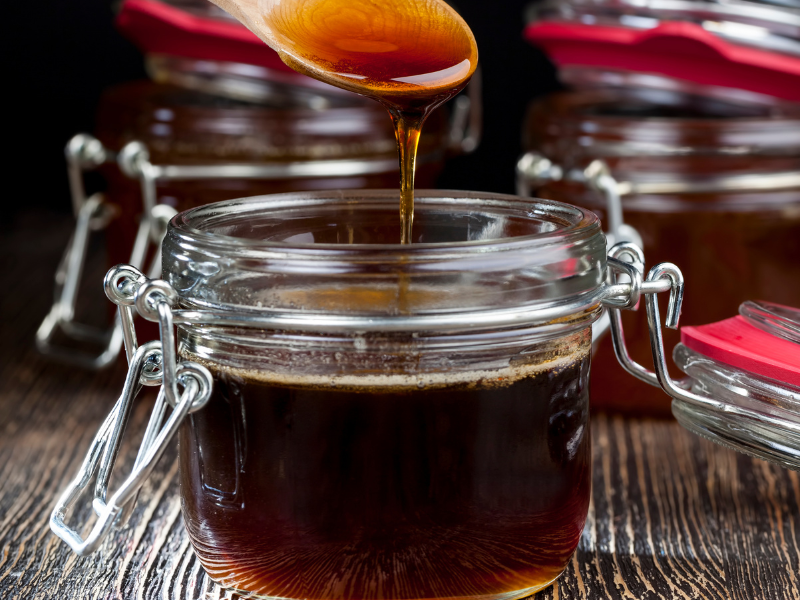
In every jar lies a liquid portrait of the soil, sunshine, and flora from which it bloomed. As bees gather nectar across distinct landscapes, this botanical journey shapes much more than just colour; the source fundamentally transforms both the taste profile and the health profile of the final harvest.
A spoonful of spring clover yields a pale, silky sweetness infused with subtle floral notes and light, anti-inflammatory flavonoids. Shift the hive to a late-summer field of dark buckwheat, and the resulting honey deepens into a rich, velvety amber, carrying notes of earthy molasses alongside a powerful surge of bioflavonoids and antioxidants.
Every single floral source weaves its own distinct story, offering a sensory and therapeutic fingerprint that is entirely its own. See below for a breakdown:
| Honey Variety | Flavor & Aroma Profile | Specific Health Strengths |
| Buckwheat Honey | Dark, robust, and rich with notes of earthy molasses | Highest in total antioxidants and bioflavonoids; exceptionally effective as a natural night-time cough suppressant in children. |
| Clover Honey | Light, silky, and delicately floral | The most common honey. Contains strong antibacterial and antioxidant properties. An excellent daily sweetener. |
| Manuka Honey | Deep amber, complex, earthy, and slightly bitter | Derived from the Leptospermum tree (New Zealand/Australia); contains high levels of Methylglyoxal (MGO), giving it unmatched antibacterial power against resistant bacterial strains. |
| Wildflower Honey | Intensely aromatic and variable depending on local blooms | Contains trace amounts of local pollens; used by consumers to help build natural tolerance against seasonal environmental allergens however there is little scientific evidence that it works. However, at acts as a natural cough suppressant, supports gut health, and provides soothing sore throat relief when consumed raw and unpasteurized. |
From Home to Hospital
1. Antioxidant & Anti-Inflammatory Power
Honey contains a rich blend of plant compounds, including flavonoids and phenolic acids. These antioxidants neutralize free radicals, helping reduce oxidative stress and chronic inflammation associated with heart disease and cellular aging.
2. Clinical Use in Healthcare Settings
In modern clinical medicine, honey is far more than a dietary choice. Medical-grade honey (such as Activon Manuka Honey, which is gamma-irradiated to eliminate bacterial spores) is widely used in hospitals for:
- Wound Healing & Burns: Honey’s low pH, high sugar osmolality (which draws moisture away from harmful microbes), and natural production of hydrogen peroxide make it a formidable antibacterial barrier.
- Ulcers & Surgical Incision Care: It promotes tissue regeneration, autolytic debridement (clearing dead tissue), and reduces wound odor.
3. Natural Upper Respiratory Relief
Major health organizations, including the World Health Organization (WHO) and the Mayo Clinic, endorse honey as a first-line treatment for soothing sore throats and calming coughs associated with upper respiratory infections.
How Much to Consume and Best Practices
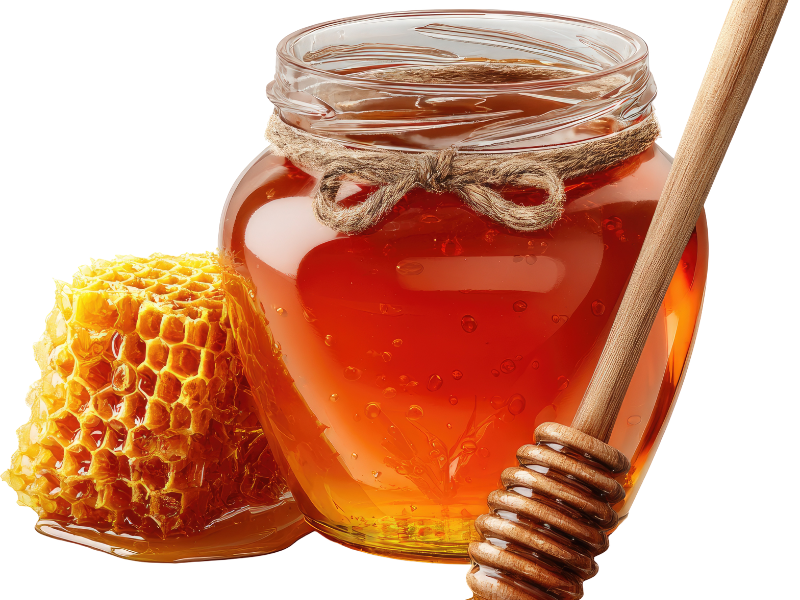
Honey is a nutrient-dense food, but it remains a concentrated source of simple carbohydrates (fructose and glucose).
- For a healthy adult, daily recommended intake is 1 to 2 teaspoons (15–30 ml). This is sufficient to reap its health benefits without overloading on sugar calories (~60 calories per tablespoon).
- How BEST to Consume:
- Add raw honey to warm (not boiling) tea, water, or yogurt.
- Drizzle over whole grains, oatmeal, or salad dressings.
- How NOT to Consume:
- Do not boil or cook at high heat. Exposing raw honey to temperatures above 40 degrees Celsius or 104 degrees Fahrenheit degrades its beneficial enzymes, delicate antioxidants, and volatile aromatic compounds. Add honey after your tea or dish has cooled slightly.
Who Should Avoid Honey?
While generally safe for most adults, honey carries specific risks for certain groups:
- Infants Under 12 Months (CRITICAL): Never give honey—raw or processed—to an infant under one year old. Honey can contain spores of Clostridium botulinum, which cause infant botulism, a rare but potentially fatal neuroparalytic condition in immature digestive systems.
- Individuals with Severe Diabetes: Although honey has a slightly lower glycemic index than table sugar, it still raises blood glucose levels. Portions must be carefully accounted for in diabetes meal planning.
- People with Severe Bee Pollen Allergies: Those with documented anaphylactic reactions to bee venom, propolis, or specific pollens should exercise caution when consuming unfiltered raw honey.
So, the next time you browse your local Canadian farmers’ market and spot those gleaming golden jars, think of them as nature’s sweetest prescription. Whether you’re swirling a spoonful of dark buckwheat honey into warm tea to soothe a stubborn cough or drizzling pale clover honey over morning oats, this ancient golden elixir remains one of the simplest, sweetest ways to nourish your body. Buy local, keep it raw, and let nature do what it has done best for thousands of years!
~ Read more from The Health Insider ~
- Healing Honey: The Health Benefits Are Sweet
 Learn about the health benefits of honey and how it boosts wellness, calms coughs, and why hospitals use medical-grade honey for healing.
 - What’s Actually in Your Groceries? A Canadian Guide to Reading Food Labels
 Decode Canadian food labels with ease. Learn how to spot hidden ingredients and understand Health Canada’s new front-of-package warning symbols.
 - Which Cooking Oil Should You Actually Be Using? A No-Nonsense Guide
 Not sure which cooking oil to use? Learn the truth about smoke points, health benefits, and the three essential bottles to keep in your kitchen.
 - The Green Mediterranean Diet: Boost Your Metabolic Health
 Swap red meat for green polyphenols to reshape your gut bacteria, drop liver fat, and supercharge your metabolic wellness.
 - The 5 Nutrients Canadians Are Most Likely Missing and How to Get Them Through Food
 Up to 40% of Canadian adults may be nutrient deficient without knowing it. Here’s what’s missing and how to fix it through food and supplements.
 - Potassium: Your Body Craves It To Survive
 Learn how this powerful electrolyte is essential for your health, and how to safely hit your daily goals through real food.
The information provided on TheHealthInsider.ca is for educational purposes only and does not substitute for professional medical advice. TheHealthInsider.ca advises consulting a medical professional or healthcare provider when seeking medical advice, diagnoses, or treatment. To read about our editorial review process click here.