Summary
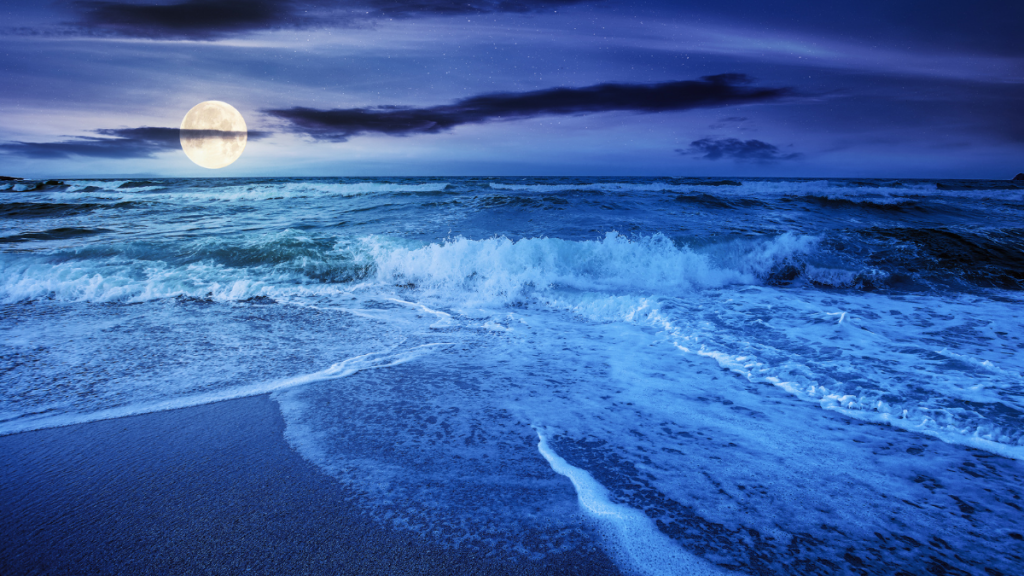
Blue Space Therapy uses natural aquatic environments to reduce stress, anxiety, and trauma. Supported by neuroscience, spending time near water activates the body's rest-and-digest system, encourages mental flow states, and improves well-being. With vast coastlines and lakes, Canadians are uniquely positioned to access these restorative health benefits.
When you buy through our links, we may earn a commission. Learn More.
Like a lot of Canadians, I think of nature as an important way to improve my mental health, and reduce stress. My mind is always eased with time spent in dense forests, rolling green hills, or quiet mountain trails. And while “green space” has long dominated ecotherapy research, scientists and mental health practitioners are turning their attention to a different spectrum of nature: blue spaces.
From crashing ocean waves and serene lakes to winding urban rivers, most of us can sense that bodies of water possess a unique ability to calm the nervous system, alleviate trauma, reduce anxiety and even lower blood pressure and heart rate. Science is now backing this notion up with research on what is now known as “Blue Space Therapy”.
What Is Blue Space Therapy?
The concept of “blue space” refers to outdoor aquatic environments including oceans, seas, coastal areas, lakes, rivers, streams, and even artificial urban water features. Blue Space Therapy (often aligned with the “Blue Mind” phenomenon coined by marine biologist Dr. Wallace J. Nichols) is the intentional use of water environments to help with psychological healing and emotional resilience.
Unlike traditional therapy conducted inside four walls, blue space therapy positions water as an active co-healer. The approach ranges from structured clinical programs (such as surf therapy for military veterans or adaptive paddleboarding) to everyday self-administered practices like coastal walking or silent shore meditation.
Does Any Body of Water Work?
A common question is whether you need access to a vast ocean to experience these mental health benefits. The short answer: No. While scale and atmosphere shape the experience, research demonstrates that benefits occur across almost all aquatic settings:
- Oceans & Seas offer high sensory dynamism. The rhythmic sound of breaking waves, ocean breeze, and a vast horizon that creates a sense of awe and perspective.
- Lakes & Ponds provide calm, mirror-like surfaces that promote quiet introspection, mindfulness, and gentle movement like kayaking or stand-up paddleboarding.
- Rivers & Streams offer continuous auditory stimulation (“white noise”) that helps quiet internal rumination and racing thoughts.
Research led by Dr. Mat White at the University of Vienna shows that even small urban canals, city harbourfronts, or fountain parks deliver measurable drops in blood pressure and cortisol levels compared to concrete city streets.
Whether it is an ocean swell or a neighbourhood creek, the key factor is engaging your senses with the water.
The Canadian Advantage: Living on the Edge of Water
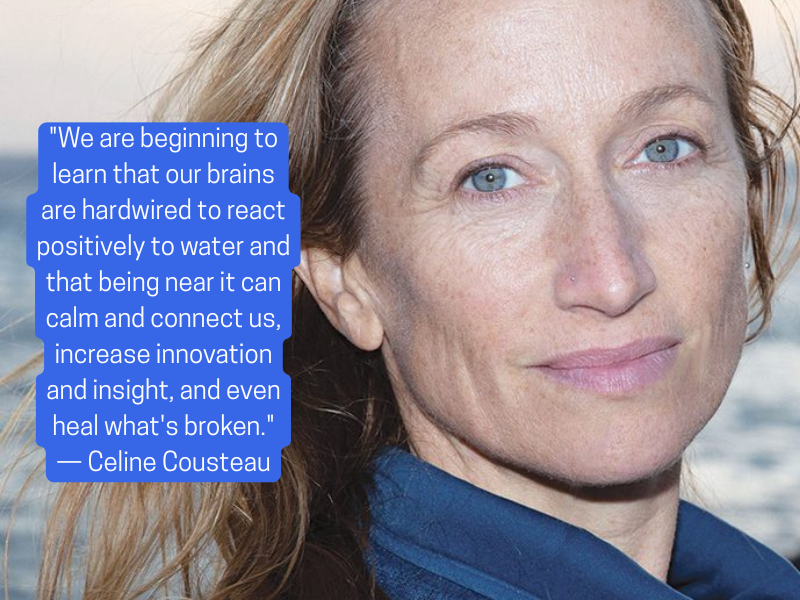
For Canadians, blue space therapy is particularly relevant. Canada holds over 20% of the world’s surface freshwater, has over 2 million lakes and possesses the longest coastline in the world flanked by three oceans: the Pacific, Atlantic, and Arctic.
Beyond remote wilderness, blue space is woven into the fabric of Canadian urban life:
- Vancouver and Victoria offer immediate ocean access alongside coastal estuaries.
- Toronto, Hamilton, and Kingston sit along the Great Lakes, where inland fresh waters stretch to the horizon like seas.
- Ottawa, Montreal, Calgary and Quebec City are anchored by major river systems (the Ottawa, Saint Lawrence, and Bow rivers).
- Halifax, St. John’s, St. John and Charlottetown – in fact, all incorporated major cities on Canada’s East Coast are on the water. Because the region consists of coastal provinces, virtually every designated city and coastal settlement sits directly on the ocean, a gulf, or a major tidal harbour.
Because even urban dwellers in Canada live within a short distance of a lake, river, or coast, blue space represents one of the nation’s most accessible, equitable health resources.
Canadian Case Studies: Healing on the Water
Real-world evidence of water’s therapeutic power is emerging across Canada through personal journeys and recreational therapy research highlighted by the Mental Health Commission of Canada (MHCC).
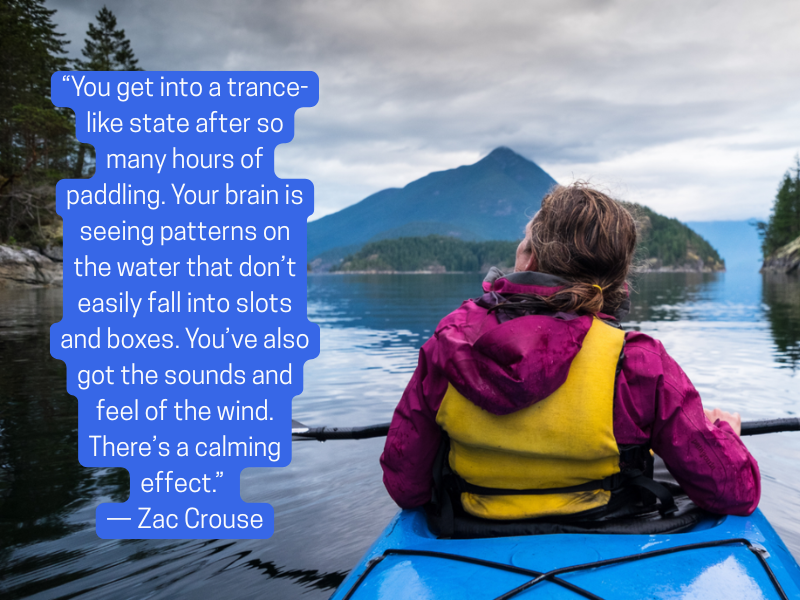
In 2009, experienced kayaker and former recreational therapist Zac Crouse lost his close friend, Corey Morris, in a kayaking accident on a rain-swollen river in Nova Scotia. Suffering from post-traumatic stress disorder (PTSD), Crouse entered therapy and took medication, eventually embarking on a 1,500-kilometre solo kayak journey as part of his recovery.
For Crouse, paddling provided a necessary break from rumination and regret, allowing his brain to process trauma while grounded in present-moment action.
Ottawa-based author and stand-up paddleboarder Dan Rubinstein undertook a 2,000-kilometre paddleboarding journey from Ottawa to Montreal, New York City, and Toronto to research the therapeutic power of water for his book Water Borne.
Rubinstein’s work demonstrates that blue space therapy doesn’t require extreme wilderness. Everyday encounters with local rivers and lakes offer significant mental restoration.
How Water Rewires the Brain
Psychological and neurological studies reveal several key mechanisms behind why water exerts such a powerful effect on human mental health. According to Dr. Jenny Roe, an environmental psychologist and director of the Centre for Design and Health at the University of Virginia, blue spaces activate the parasympathetic nervous system, our body’s “rest and digest” mechanism. Exposure to water lowers cortisol levels, slows heart rate, and softens facial and muscular tension.
Dr. Roe outlines four psychological triggers activated by water:
- Being Away: Water physically and mentally separates us from daily routines and habitual stressors.
- Extent: Large bodies of water conjure a feeling of boundlessness, offering a sense of perspective when personal problems feel overwhelming.
- Soft Fascination: Sights like light dancing on ripples or waves washing ashore capture our attention effortlessly. This gives the brain’s executive control center a rest, reducing cognitive fatigue caused by screen time and intense focus.
- Compatibility: Water environments foster an intuitive sense of comfort, belonging, and calm.
Which Blue Space Therapy is Best?
While blue space benefits general wellness, research shows it may help with specific conditions such as:
- Trauma & PTSD: The sensory engagement of water helps regulate hyperarousal in the nervous system without requiring immediate verbal processing of trauma.
- Anxiety & Chronic Burnout: “Soft fascination” eases the mental fatigue caused by constant digital stimulation and high-stress work environments.
- Addiction Recovery: Group-based blue space activities build healthy dopamine pathways, encourage physical movement, and foster non-stigmatizing peer support.
- Grief & Loss: The vastness and rhythmic repetition of water environments provide a safe emotional space for processing loss.
If you’re wondering which therapy is best for you, share the following list with your healthcare provider to discuss the best approach for your needs.
| Delivery Method | Examples & Interventions | Target Outcomes |
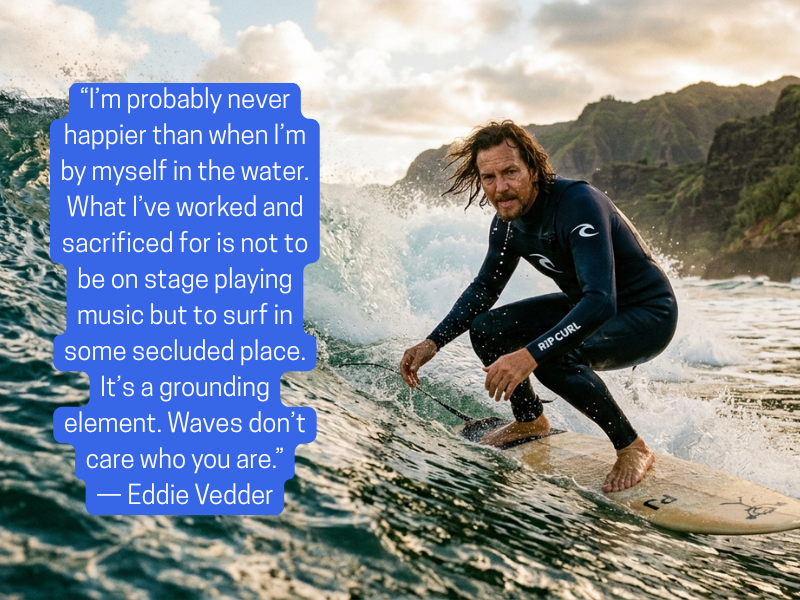
| Guided / Clinical Therapy | Surf therapy (e.g. Waves of Recovery), veteran sailing programs (Turn to Starboard), therapeutic scuba/freediving. | PTSD, severe trauma, addiction recovery, major depressive disorder. |
| Social Prescribing | Healthcare providers prescribing time near water, coastal walking groups, community rowing clubs. | Loneliness, mild-to-moderate anxiety, hypertension, mild depression. |
| Self-Administered Practice | Mindful shore walking, wild/cold-water swimming, kayaking, or sitting quietly by a riverbank. | Daily stress management, digital detox, burnout prevention, general well-being. |
Many Canadians have access to blue spaces. Whether it be a river or creek in your hometown, a waterfront park in your city, you certainly don’t need a formal prescription or expensive equipment to benefit from blue space. Simply taking 20 minutes to walk along a lakefront, sit near an urban river, or focus on the sight and sound of water can trigger the “Blue Mind” state, lower stress and restore clarity.
Subscribe to the Health Insider for more evidence-based health information.
~ Read more from The Health Insider ~
- Women’s Heart Disease Risk: The Pregnancy Connection
 New McGill risk models re-evaluate women’s heart health. Learn how pregnancy history helps you and your doctor take control of your cardiac risk.
 - 5 Health Podcasts Worth Adding to Your Rotation
 Looking for trustworthy health advice? Discover 5 reliable, expert-backed health podcasts, including 3 great Canadian shows, to queue up next.
 - New Heart Bypass Surgery Technique Helps Patients Heal Faster
 A Canadian-developed heart bypass technique helps patients heal faster with less pain and zero sacrifice in safety. Learn about the MIST Trial.
 - Canada’s Family Doctor Shortage: Relief Is on the Way
 From new medical schools to expanded residency seats, see how every province is training the next generation of family doctors.
 - The Preservatives in Your Grocery Cart May Be Raising Your Blood Pressure
 A new study links common food preservatives in processed foods to high blood pressure. Learn which additives to avoid for better heart health.
 - Could the Secret to Better Sleep Be in Your Gut?
 Struggling to sleep? Learn how your gut microbiome and the gut-brain axis control sleep hormones, and get simple dietary tips for better rest.
The information provided on TheHealthInsider.ca is for educational purposes only and does not substitute for professional medical advice. TheHealthInsider.ca advises consulting a medical professional or healthcare provider when seeking medical advice, diagnoses, or treatment. To read about our editorial review process click here.