

GLP-1 receptor agonists are a class of drugs initially developed to treat diabetes. Referred to as a “molecular Swiss Army Knife” in a recent Economist article, GLP-1’s are now being touted as nothing less than revolutionary as scientists discover that they contain benefits for a variety of health conditions.
Known as semaglutide, with popular brands like Ozempic, Wegovy, and Mounjaro, these drugs were originally used to regulate blood sugar and help with weight loss. Recently, however, their potential has expanded into new areas, with studies revealing possible benefits for cardiovascular disease, chronic kidney disease, sleep apnea, Alzheimer’s disease, and possibly even lifespan extension.
GLP-1 Hormones; Playing a Role in Overall Health
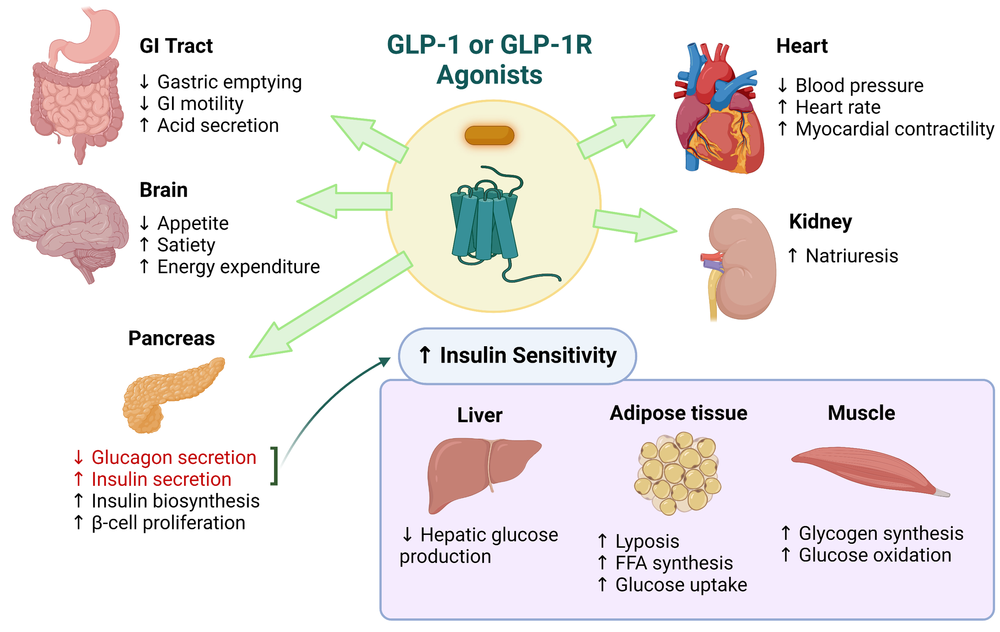
The key to these drugs’ wide-ranging effects lies in how GLP-1, a short-lived hormone produced in the gut after meals, interacts with various systems in the body.
GLP-1 influences blood sugar by prompting insulin release, suppressing glucagon, and slowing the digestive process, leading to increased feelings of fullness. It also interacts with the brain, particularly areas related to hunger and reward, which explains its role in weight management and potentially, addiction control.
GLP-1 drugs have now shown promise in cardiovascular health as well. In a study involving over 17,600 overweight or obese patients taking semaglutide , researchers found that participants not only lost weight but also experienced a 20% reduction in serious cardiovascular events like strokes and heart attacks, even before significant weight loss occurred. The drug’s direct impact on heart and blood vessel cells may help improve blood pressure and lipid levels while reducing oxidative stress, potentially extending benefits beyond weight-related health risks.
In terms of cellular protection, GLP-1 drugs also seem to reduce inflammation and oxidative stress across multiple organs. By targeting GLP-1 receptors in the brain and immune cells, these drugs appear to modulate immune responses, lowering chronic inflammation—a factor linked to conditions like cancer, cardiovascular diseases, and autoimmune disorders.
GLP-1 Hormone and The Brain
Furthermore, GLP-1’s influence on inflammation in the brain has sparked interest in using these drugs to manage neurodegenerative conditions like Alzheimer’s. Preliminary studies suggest they may reduce amyloid buildup and support brain health, potentially slowing cognitive decline.
Scientists are also investigating GLP-1 agonists for their potential in treating addiction and extending lifespan. In animal studies, they have been shown to reduce addictive behaviours including dependence on alcohol, opioids, and tobacco, with early human studies exploring similar effects.
Despite these exciting possibilities, there are practical considerations. The high cost of GLP-1 drugs, as well as the apparent need for lifelong use, are barriers to widespread access. But, as more drug companies get into the game, prices are expected to decrease, and generic versions may become available.
There is no doubt that GLP-1’s could be the medical advancement of our generation, but questions still rankle. What are the underlying causes of metabolic disorder? Is it necessary to have entire populations medicated to change the core problem? Does this new medication actually solve problems that are not tied to metabolic disorders such as living a longer, healthier life?
Subscribe to The Health Insider so you don’t miss a beat as we report on this complex topic.
~Read more from The Health Insider~
- GLP-1s and Bone Health: Potential Risks for Non-Diabetics
 New studies reveal a 22% higher osteoporosis risk for non-diabetics on GLP-1s. Learn how these weight-loss drugs may impact your skeletal strength.
 - Kidney Breakthrough: Health Canada Authorizes First-of-its-Kind Treatment for Lupus NephritisHealth Canada authorizes Gazyva for lupus nephritis. Discover how this twice-yearly treatment improves kidney response and prevents failure.
- New Study Warns of Rapid Weight Regain When Quitting Weight Loss DrugsNew research shows stopping weight loss medication leads to rapid regain, with many returning to their original weight in less than two years.
- Does HRT Increase Dementia Risk? New 1M Woman StudyA study of 1M women finds HRT doesn’t increase dementia risk. We dive into the findings and why women are still more likely to face Alzheimer’s.
- Health Canada Authorizes First 8-Week Treatment for Acute Hepatitis CHealth Canada’s approval of MAVIRET for acute HCV allows doctors to treat adults and children immediately, a key step toward the 2030 elimination goal.
- Health Canada Authorizes TNKase for Treatment of Adult StrokeHealth Canada officially authorizes TNKase for treating acute ischemic stroke in adults. This pivotal approval introduces a faster, 5-second injection to emergency rooms nationwide.






The information provided on TheHealthInsider.ca is for educational purposes only and does not substitute for professional medical advice. TheHealthInsider.ca advises consulting a medical professional or healthcare provider when seeking medical advice, diagnoses, or treatment. To read about our editorial review process click here.


