
Summary
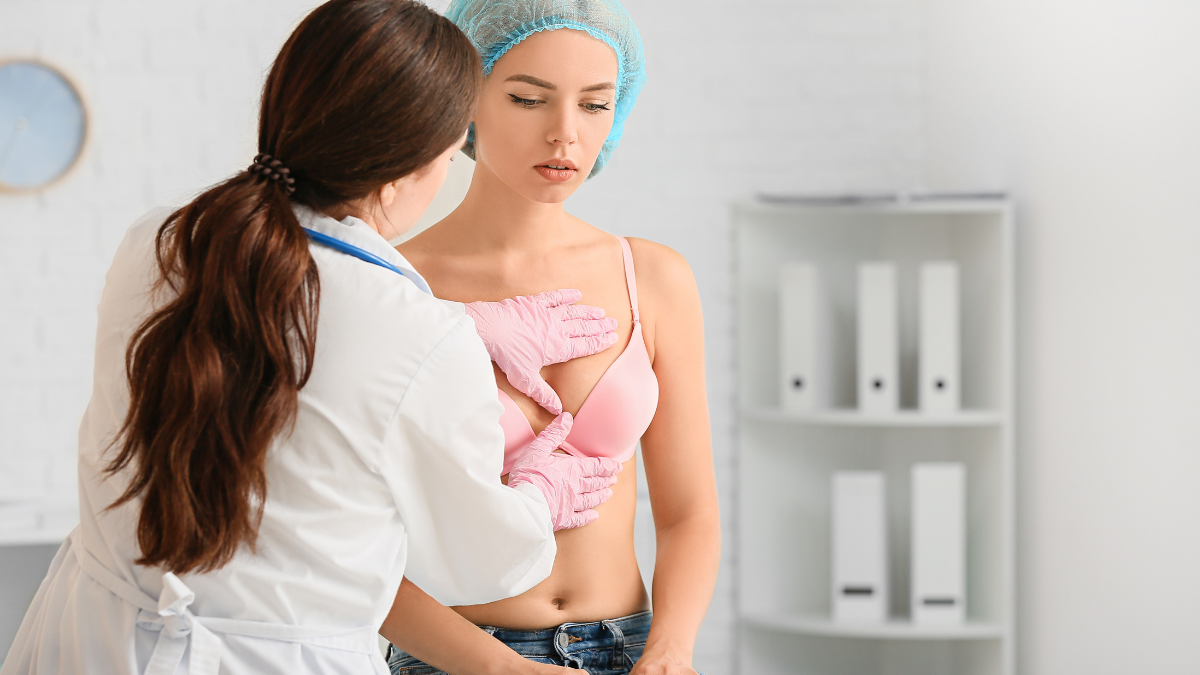
Canadian engineers have developed a revolutionary, non-invasive smart bra that 'feels' for stiff tumours with 100% pilot success. This low-cost, radiation-free system aims to solve critical screening gaps for remote communities and the 40% of women with dense breasts.
Finding breast cancer early saves lives. When caught in its initial stages, the 5-year breast cancer survival rate soars to 90% or higher. For decades, the mammogram has been the gold standard for screening, but it’s not without its barriers. Access can be difficult for those in remote communities, radiation is a concern for some, and for women with dense breasts, a classification that affects roughly 40% of Canadian women over the age of 40, the imaging can be significantly less accurate.
But what if a comfortable, accessible, and highly accurate alternative was on the horizon?
Enter Dr. Elijah Van Houten and his team at the Université de Sherbrooke. With funding from the Canadian Cancer Society, and Breast Cancer Canada, they are developing a high-tech bra designed not to image, but to feel for cancer.
Dr. Van Houten, a mechanical engineer by training, explains that this project is a natural extension of his work, which involves combining physics-based models with medical data.
“Breast cancer is really, really stiff compared to normal tissue,” Dr. Van Houten notes. “It’s one of the best cancers to look at in that sense… It’s a great, what we call contrast mechanism to try and identify breast cancer.”
The Technology: Feeling the Difference
The team is exploiting this natural stiffness contrast. Unlike a mammogram, which uses X-rays, Dr. Van Houten’s system uses a regular, low-cost bra as a sensor. As the patient moves, a sophisticated, external data acquisition system monitors the tiny movement of the breast. By analyzing these motions, the system can pinpoint any stiff regions—a telltale sign of a potential tumour.
This approach solves a decades-old clinical problem. While stiffness imaging (elastography) is proven to work, “If we take an image of breast cancer with MRI technology, it shows up like there’s a gigantic red ball. It’s so clear,” he says. The cost of an MRI makes it impossible for mass screening. The bra makes effective technology accessible.
Furthermore, the bra itself has no embedded technology. Dr. Van Houten clarifies: “The bras we use are actually, at the base, the bras that we buy at Walmart… they’re just normal bras, so they’re comfortable.”
Addressing the Screening Gaps
This low-cost, non-invasive method is critical for solving major gaps in current screening:
- Dense Breasts: For women with dense breasts, mammograms are often ineffective. Dr. Van Houten’s team believes their system can succeed where X-rays fail: “A tumour is still stiff, whether the breast is large or not. So we’re imagining we should be able to see cancers even in women with dense breasts.”
- Younger Women: Standard mammography can’t be used for women under 40 due to concerns about lifetime radiation exposure. The bra removes this risk. “A doctor can’t start screening with X-ray mammography at the age of 30, because that’s too much x-ray exposure over the woman’s lifespan,” he says. The bra offers a safe alternative for this growing risk group.
From Pilot Success to Real-World Testing
The results from their initial pilot study are undeniably exciting. In a test group of 22 women, the smart bra system achieved a 100% success rate in detecting tumours, with zero false positives.
Dr. Van Houten explains this success was vital for the project’s strategic progression: “We basically had to determine right away, if this is worth going after or not. If we could see these cases, then I think it’s worth going after.”
That high-confidence result paved the way for the next phase. His team is now scaling up their research, moving from the successful pilot to a much larger study involving 300 women to test the system in “more realistic” situations.
A Vision for Global Accessibility
The ultimate goal for the bra is to revolutionize accessibility across the board.
“The impact this could have on society is that we would be able to detect breast cancer very early, and at very low cost, with a system that could be used anywhere in the world,” says Dr. Van Houten.
This vision extends to practical deployment, bridging the healthcare gap for those far from major hospitals.
“If we have something we could just send to them at home and say, ‘Hey, just wear this,'” he proposes, the system could easily put a woman into the necessary clinical pipeline if a problem is detected.
The development is a testament to the willingness of organizations like the Canadian Cancer Society to take a chance on unconventional ideas.
As Dr. Van Houten notes: “They’re willing to take risks on people and willing to work around the edges of traditional health funding that diversifies the projects that you get, and diversity is good.”
Dr. Van Houten’s work represents a profound shift toward personalized, low-cost screening that could make early detection a reality for every woman, regardless of where she lives or her breast density.
~ Read more from The Health Insider ~
- Top 5 Shock-Absorbing Running Shoes to Protect Your Joints
 SummaryDiscover the best shock-absorbing running shoes to protect your joints and improve recovery. Learn how proper midsole cushioning reduces impact forces on your feet, ankles, and hips during long road runs. Explore top-rated, comfortable footwear options from HOKA, Brooks, ASICS, New Balance, and Saucony for every stride. Running is one of the simplest ways to…
 - Living Near a Golf Course May Raise Your Parkinson’s Risk, Study FindsA new study found people living within a mile of a golf course had significantly higher odds of developing Parkinson’s disease. Here’s what it means.
- IBD Is a Gut Disease. So Why Does It Start Affecting Mental Health Years Before Diagnosis?New research shows anxiety and depression often start years before an IBD diagnosis. Learn how chronic gut inflammation affects mental health.
- Fibroid Relief: New Treatments On The HorizonDiscover how groundbreaking, non-invasive treatments are restoring hope, preserving organs, and freeing women from life-altering fibroid pain.
- Canada’s Cigarette Packages Just Got a Lot Harder to IgnoreCanada has launched new graphic warnings on cigarette packs and individual sticks. Learn how these updated labels aim to reduce smoking rates.
- Leafy Greens Ranked For Top Health BenefitsExplore our definitive ranking of Canadian summer greens. Learn the health benefits of local arugula, spinach, chicories & more.





The information provided on TheHealthInsider.ca is for educational purposes only and does not substitute for professional medical advice. TheHealthInsider.ca advises consulting a medical professional or healthcare provider when seeking medical advice, diagnoses, or treatment. To read about our editorial review process click here.


