
Summary
An overview of radon risk in Canadian homes, why testing rates remain low, and a new free postal code tool from Homeowner.ca that helps Canadians quickly assess the risk in their area.
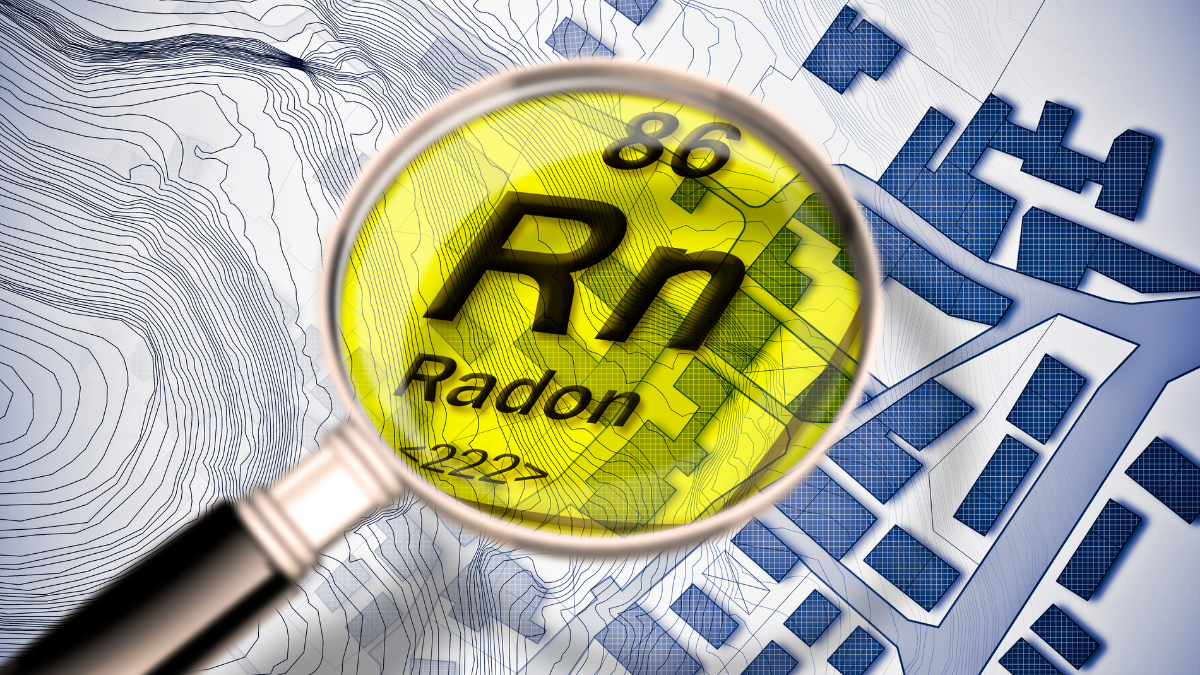
It’s invisible, odourless, and it’s lurking in an estimated one in five Canadian homes. Radon is a naturally occurring radioactive gas, and it’s the leading cause of lung cancer among Canadians who have never smoked.
The alarming part? Only 12% of non-apartment households in Canada have ever tested for it.
What is radon, exactly?
Radon forms naturally when uranium in soil and rock breaks down. It seeps up through the ground and can accumulate indoors, particularly in basements and lower floors where ventilation is limited. At low levels outdoors it’s harmless, but trapped inside a home, prolonged exposure significantly raises the risk of lung cancer.
Canada’s safety guideline is 200 Bq/m³ (becquerels per cubic metre). An estimated one in five Canadian homes sits at or above that threshold, yet most homeowners have no idea whether theirs is one of them.
Testing rates are low and uneven
Testing varies significantly by province. New Brunswick leads at 19%, followed by Nova Scotia at 18% and Saskatchewan at 17%. British Columbia and Ontario sit at the bottom, at 7% and 10% respectively despite elevated radon levels being documented in every province and territory.
The gap between risk and awareness is what prompted Homeowner.ca to act.
A new free tool to check your risk by postal code
Homeowner.ca has launched the Radon Risk Lookup, a free tool that lets Canadians instantly check the radon risk in their area using just the first three characters of their postal code. It draws on federal and independent Canadian radon datasets to show the share of homes in a given area that have tested above the guideline.
“The science is solid, but the data is spread across federal reports, academic surveys, and provincial dashboards written for policy people, not the person who just wants to know whether their basement is a problem,” said Angela Nightingale, Senior Editor at Homeowner.ca. “We built the Radon Risk Lookup to translate all of that into one clear answer.”
No account is needed, and the tool is available now.
So what should you do?
If you’ve never tested your home for radon, experts say you should. A test kit costs less than a family dinner and can be ordered online or picked up at many hardware stores.
Long-term test kits (90 days or more) are considered the most accurate. If results come back above the guideline, the good news is that radon mitigation is straightforward, typically involving improved ventilation or a sub-slab depressurization system installed by a certified contractor.
The risk is real, the test is simple, and the fix is available. Checking your postal code is a reasonable place to start.
The Radon Risk Lookup is free and available at homeowner.ca/t/radon-risk-lookup.
Subscribe to The Health Insider newsletter where you’ll find many more insights – delivered straight to your inbox.
~ Read more from The Health Insider ~
- Top 5 Shock-Absorbing Running Shoes to Protect Your Joints
 SummaryDiscover the best shock-absorbing running shoes to protect your joints and improve recovery. Learn how proper midsole cushioning reduces impact forces on your feet, ankles, and hips during long road runs. Explore top-rated, comfortable footwear options from HOKA, Brooks, ASICS, New Balance, and Saucony for every stride. Running is one of the simplest ways to…
 - Living Near a Golf Course May Raise Your Parkinson’s Risk, Study FindsA new study found people living within a mile of a golf course had significantly higher odds of developing Parkinson’s disease. Here’s what it means.
- IBD Is a Gut Disease. So Why Does It Start Affecting Mental Health Years Before Diagnosis?New research shows anxiety and depression often start years before an IBD diagnosis. Learn how chronic gut inflammation affects mental health.
- Fibroid Relief: New Treatments On The HorizonDiscover how groundbreaking, non-invasive treatments are restoring hope, preserving organs, and freeing women from life-altering fibroid pain.
- Canada’s Cigarette Packages Just Got a Lot Harder to IgnoreCanada has launched new graphic warnings on cigarette packs and individual sticks. Learn how these updated labels aim to reduce smoking rates.
- Leafy Greens Ranked For Top Health BenefitsExplore our definitive ranking of Canadian summer greens. Learn the health benefits of local arugula, spinach, chicories & more.






The information provided on TheHealthInsider.ca is for educational purposes only and does not substitute for professional medical advice. TheHealthInsider.ca advises consulting a medical professional or healthcare provider when seeking medical advice, diagnoses, or treatment. To read about our editorial review process click here.