Summary
This article explains why checking your daily calcium intake is crucial for long-term bone health. It covers the risks of low calcium, recommended daily targets, best food sources, and how to use the Osteoporosis Canada Calcium Calculator to protect your bones and help prevent bone loss.
🥛 Are You Getting Enough? The Simple Tool That Can Save Your Bones
For years, we’ve heard that calcium is essential for strong bones. But in our busy lives, how many of us actually know if we’re hitting our daily target? The truth is, insufficient calcium intake is a silent threat, laying the groundwork for serious conditions like osteoporosis, a disease characterized by fragile bones and an increased risk of fracture.
These are not minor incidents; they represent a major public health concern. At least 1 in 3 women and 1 in 5 men will suffer from an osteoporotic fracture during their lifetime. For those aged 50 and older, the impact is even starker, as over 80% of all fractures in this demographic are caused by underlying osteoporosis. This highlights the urgent need to address bone health long before these serious, life-altering events occur.
Fortunately, tools like the Osteoporosis Canada Calcium Calculator are demystifying this vital nutrient, giving you the power to assess your diet and protect your skeletal health.
Calcium: The Unsung Hero of the Human Body
While best known for supporting bone and tooth structure, calcium plays a crucial role in numerous other bodily functions, including:
- Muscle contraction
- Nerve function
- Blood clotting
- Maintaining a regular heartbeat
Your body tightly regulates the amount of calcium in your blood. If your diet doesn’t provide enough, your body will steal it directly from its largest reserve, your bones, to maintain essential functions. Over time, this constant borrowing leads to weakened bones.
Your Daily Target: What the Experts Recommend
While needs vary based on age and gender, many adults have a daily calcium requirement of 1,000 mg to 1,200 mg. For instance, women over 50 and men over 70 generally require 1,200 mg per day.
The most effective way to reach this target is through your diet. This is where the Calcium Calculator comes into play. Developed by Osteoporosis Canada, the tool allows you to input your specific daily food servings from various categories—Milk & Alternatives, Fruits & Vegetables, Grains, and Proteins, to generate an approximate daily calcium intake figure.
This provides a vital snapshot, revealing whether your current eating habits are meeting your body’s demands.
🥛 Check Your Daily Calcium Intake
Are you getting enough calcium to protect your bones? Use the Osteoporosis Canada Calcium Calculator to find out in just a few minutes.
Try the Calculator →🥗 Food First: The Best Sources of Calcium
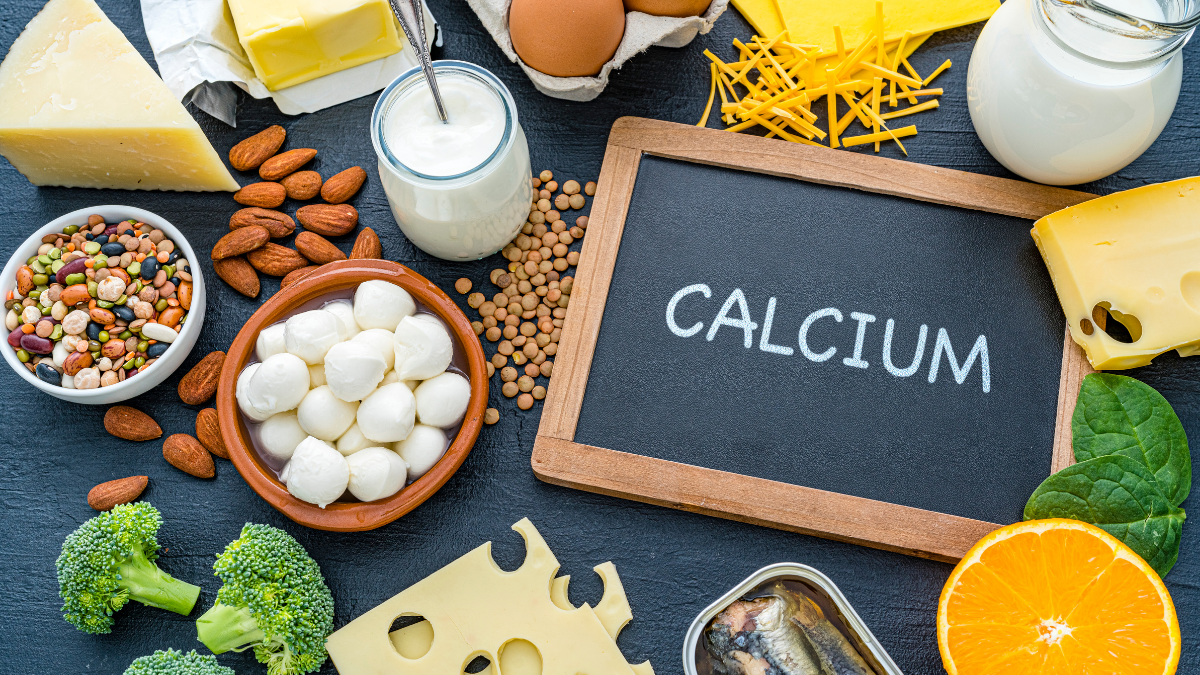
Experts strongly recommend obtaining calcium from food sources whenever possible, as they offer synergistic nutrients that aid absorption. However, it is important to note that not all calcium-containing foods are equally effective; for instance, with foods like spinach, rhubarb, and Swiss chard, calcium is poorly absorbed due to their high oxalate content, which binds the mineral and inhibits absorption. The calculator highlights that calcium is not just found in dairy; it’s widely available across many food groups:
Calcium-Rich Foods
The Role of Supplements
If your diet calculation consistently falls short, you may need a supplement to bridge the gap.
However, dietary supplements are not a substitute for a healthy diet and should be used cautiously. Osteoporosis Canada advises that individuals who cannot get enough calcium through food alone may need to take a supplement, such as calcium carbonate or calcium citrate.
Crucially, this decision should always be discussed with your physician to ensure proper dosage and to review any possible side effects or interactions with other medications.
Take Action Today
Your bone health is an ongoing investment. Don’t wait until a fracture forces the conversation. Use the Osteoporosis Canada Calcium Calculator today to empower yourself with knowledge, identify dietary gaps, and take concrete steps toward a stronger, healthier future.
~ Read more from The Health Insider ~
- Top 5 Shock-Absorbing Running Shoes to Protect Your Joints
 SummaryDiscover the best shock-absorbing running shoes to protect your joints and improve recovery. Learn how proper midsole cushioning reduces impact forces on your feet, ankles, and hips during long road runs. Explore top-rated, comfortable footwear options from HOKA, Brooks, ASICS, New Balance, and Saucony for every stride. Running is one of the simplest ways to…
 - Living Near a Golf Course May Raise Your Parkinson’s Risk, Study FindsA new study found people living within a mile of a golf course had significantly higher odds of developing Parkinson’s disease. Here’s what it means.
- IBD Is a Gut Disease. So Why Does It Start Affecting Mental Health Years Before Diagnosis?New research shows anxiety and depression often start years before an IBD diagnosis. Learn how chronic gut inflammation affects mental health.
- Fibroid Relief: New Treatments On The HorizonDiscover how groundbreaking, non-invasive treatments are restoring hope, preserving organs, and freeing women from life-altering fibroid pain.
- Canada’s Cigarette Packages Just Got a Lot Harder to IgnoreCanada has launched new graphic warnings on cigarette packs and individual sticks. Learn how these updated labels aim to reduce smoking rates.
- Leafy Greens Ranked For Top Health BenefitsExplore our definitive ranking of Canadian summer greens. Learn the health benefits of local arugula, spinach, chicories & more.




The information provided on TheHealthInsider.ca is for educational purposes only and does not substitute for professional medical advice. TheHealthInsider.ca advises consulting a medical professional or healthcare provider when seeking medical advice, diagnoses, or treatment. To read about our editorial process, click here.