When you buy through our links, we may earn a commission. Learn More.
There is no doubt that a firm handshake is important for social cues, but did you know that the firmness of your grip is now thought to be better than your blood pressure at assessing your overall health?
Darryl Leong, associate professor of medicine at McMaster University, Cardiologist and lead researcher for a joint study on by McMaster University and Hamilton Health Sciences says that the study uncovered that grip strength is a surprisingly powerful indicator of overall health.
“Grip strength could be an easy and inexpensive test to assess an individual’s risk of death and cardiovascular disease,” said Dr. Leong. “Doctors or other healthcare professionals can measure grip strength to identify patients with major illnesses such as heart failure or stoke who are at particularly high risk of dying from their illness.”
It turns out that how firmly you can squeeze a tennis ball can tell a lot about your risk for frailty, metabolic health, overall risk of disease, and even how long you might live.
What Is Grip Strength and Why It Matters
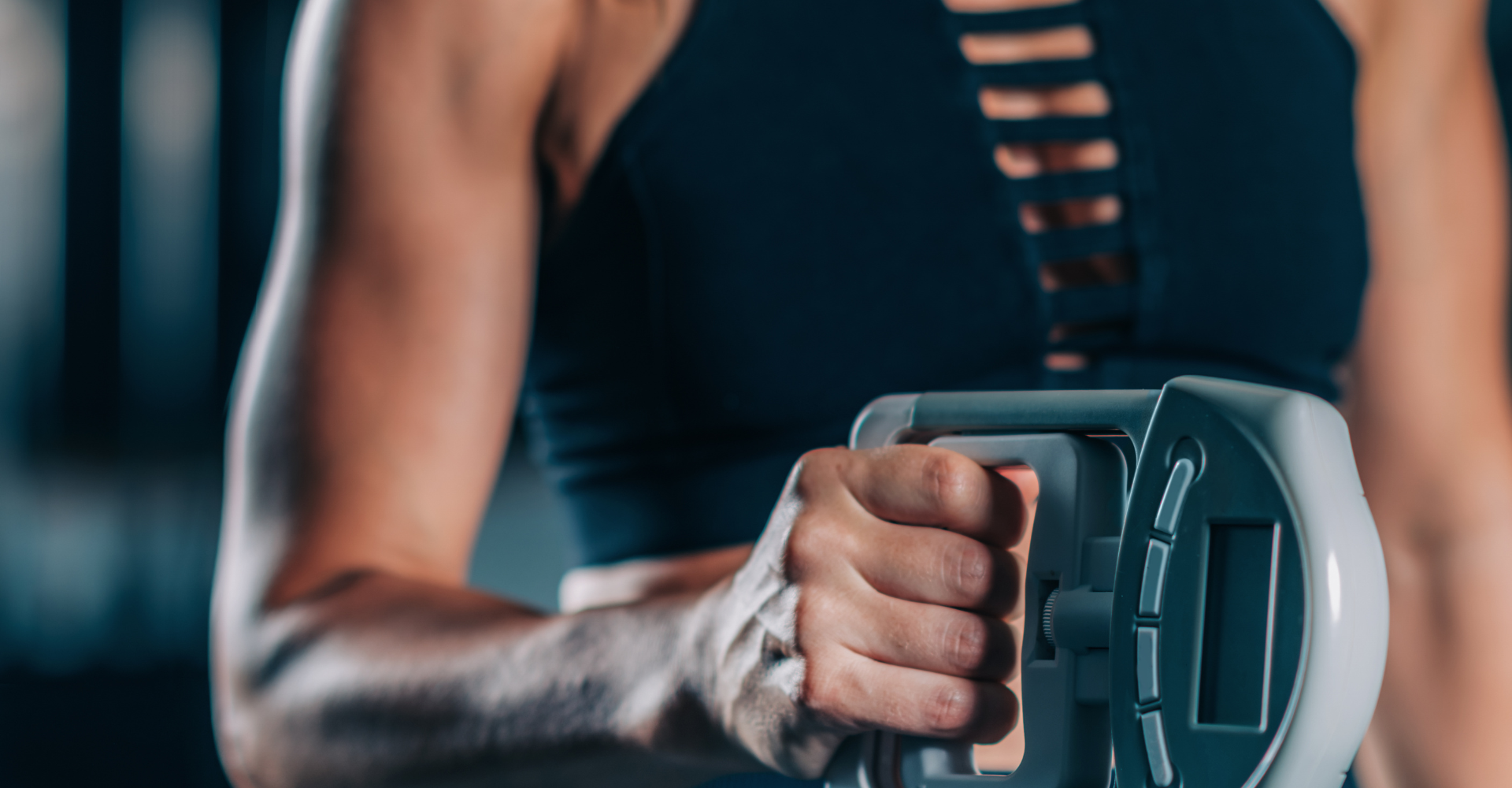
Grip strength refers to how much force you can generate by squeezing. It’s usually measured with a hand dynamometer — a device you grip as hard as you can while it calculates your strength. With today’s technology, you can measure and track changes in grip strength as you work out to improve. But what does the strength of your grip actually tell us?
While a weak grip might just seem like a nuisance (like making it harder to open jars), scientists increasingly use it as a proxy for full-body muscle strength and overall health.
Measure Your Hand Strength
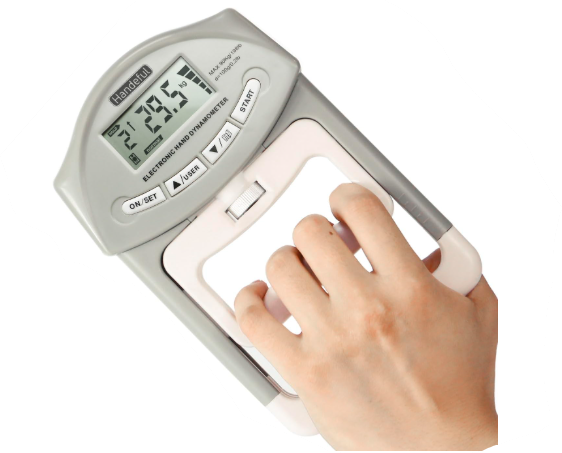
Keep track of your grip strength in the comfort of your own home! Track your progress easily with the Handeful high-precision dynanometer.
Grip Strength Predicts Longevity and Disease Risk
One of the most influential and largest studies of its kind, Dr. Leong and his colleagues tracked the grip strength of nearly 140,000 adults across 17 countries using a dynamometer. Participants were followed for an average of four years to see how their muscle strength related to their health over time.
The results were eye-opening: for every 11-pound drop in grip strength, the risk of dying from any cause rose by 16 per cent. The chances of dying from heart disease increased by 17 per cent, while stroke risk went up by 9 per cent and heart attack risk by 7 per cent.
Lack of grip power is also tied to sarcopenia — age-related muscle loss — which increases your risk of falls, fractures, and poor mobility. According to another study, grip power below 25.5 kg for men and 18 kg for women suggests an increased risk of sarcopenia.
Must Read
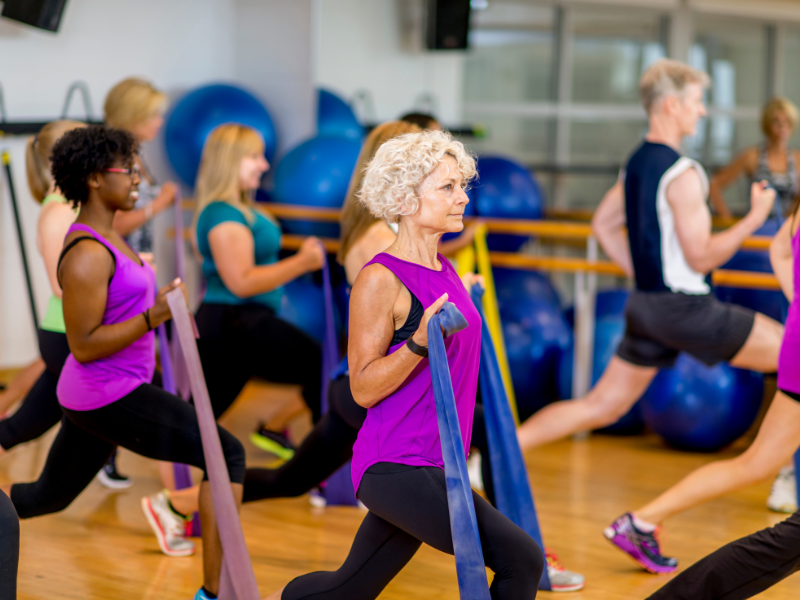
Defy aging and remain strong, independent and thriving through strength training.
What You Can Do to Improve Grip Strength
The good news? You can improve your grip power at any age — and you don’t need fancy equipment.
Try These Simple Exercises at Home
Wrist Curls
Sit with your forearm resting on your leg, palm up. Hold a can or light weight and slowly curl your wrist upward, then lower it. Do 2–3 sets of 10–20 reps.
Bicep Curls
Using a dumbbell or kettlebell, perform curls to help strengthen the muscles that support your grip.
Timed Holds
Squeeze a tennis or stress ball as hard as you can for 15–30 seconds. Track your time to monitor improvements.
You will find that the strength of your grip improves as your total muscle strength improves, so make sure you focus on more than just your grip. Dr. Leong encourages full-body strength training and regular physical activity to support healthy muscles and bones.
Dr. Leong also recommends trying the get-up-and-go mobility test below. This test evaluates lower body strength and mobility, which are just as important for long-term health. Healthy older adults typically complete it in 10 seconds or less. A time of 13.5 seconds or longer may indicate a higher risk of falls.
Time yourself as you:
- Stand up from a chair
- Walk three metres
- Turn around
- Walk back and sit down
Why Everyone Should Test Their Grip
Grip strength may even reflect national trends in health. Studies show that countries with stronger average grip tend to win more Olympic medals — an unexpected but telling correlation.
You may not be a future Olympian, but if you want a quick, cost-free way to check in on your health — start by grabbing a tennis ball and test your grip regularly. Your muscles, metabolism, and future self will thank you.
~ Read more from The Health Insider ~
- Leafy Greens Ranked For Top Health Benefits
 Explore our definitive ranking of Canadian summer greens. Learn the health benefits of local arugula, spinach, chicories & more.
 - Women’s Heart Disease Risk: The Pregnancy ConnectionNew McGill risk models re-evaluate women’s heart health. Learn how pregnancy history helps you and your doctor take control of your cardiac risk.
- 5 Health Podcasts Worth Adding to Your RotationLooking for trustworthy health advice? Discover 5 reliable, expert-backed health podcasts, including 3 great Canadian shows, to queue up next.
- New Heart Bypass Surgery Technique Helps Patients Heal FasterA Canadian-developed heart bypass technique helps patients heal faster with less pain and zero sacrifice in safety. Learn about the MIST Trial.
- Canada’s Family Doctor Shortage: Relief Is on the WayFrom new medical schools to expanded residency seats, see how every province is training the next generation of family doctors.
- The Preservatives in Your Grocery Cart May Be Raising Your Blood PressureA new study links common food preservatives in processed foods to high blood pressure. Learn which additives to avoid for better heart health.





The information provided on TheHealthInsider.ca is for educational purposes only and does not substitute for professional medical advice. TheHealthInsider.ca advises consulting a medical professional or healthcare provider when seeking medical advice, diagnoses, or treatment. To read about our editorial review process click here.