Summary
Researchers have developed a low-cost, stamp-sized graphene sensor capable of tracking dopamine levels in tear fluid. This non-invasive technology could eventually open the door for the ultra-early detection of Parkinson's disease and other neurological conditions long before physical symptoms appear.
A blood draw, a urine sample, an MRI. These are the tools we typically associate with monitoring neurological health. But researchers are now exploring something far simpler and far less invasive: your tears.
A new study published in ACS Omega has described a low-cost sensor capable of detecting dopamine in tear fluid, a finding that could eventually support earlier, easier monitoring of Parkinson’s disease and other neurological conditions linked to atypical dopamine levels.
What the Research Found
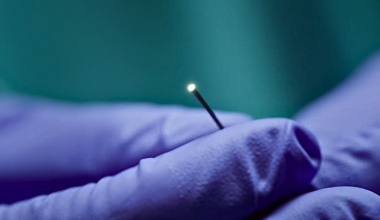
The device, developed by researchers and published by the American Chemical Society, works by using a laser to convert portions of a thin plastic film into electrically conductive graphene. About the size of a postage stamp, the sensor produces an electrical signal when dopamine reacts with the graphene surface.
In laboratory tests, the researchers added dopamine to artificial human tears and measured the sensor’s response. It accurately detected dopamine across a range of concentrations, including levels consistent with those previously reported in the tears of people with Parkinson’s disease. The sensor also maintained its accuracy in the presence of other compounds naturally found in tears.
“Our sensor can detect dopamine from levels well below the healthy baseline and up to three times higher,” said coauthor Lucas Minghini Gonçalves. “This capability ensures that a person’s initial dopamine drop can be identified early on, which is crucial to enabling timely, proactive therapeutic interventions.”
The corresponding author, Neftalí Lênin Villarreal Carreño, described the broader aim as facilitating “the ultra-early detection of neurological disorders, creating opportunities for clinical interventions before major symptoms manifest.”
Why Dopamine and Why Tears?
Dopamine is a neurotransmitter involved in movement, learning, motivation, and emotional regulation. In Parkinson’s disease, the brain cells that produce dopamine deteriorate progressively, and it is this loss that drives the condition’s signature motor symptoms: tremors, slowed movement, rigidity, and postural instability.
Current methods for monitoring dopamine levels include blood samples, urine analysis, and implanted devices, all of which are time-consuming, invasive, or impractical for routine monitoring. Tears, by contrast, can be collected quickly and painlessly, and the researchers describe them as a promising source of health information that has been largely under explored for neurological monitoring.
Why This Matters for Canadians
Parkinson’s disease is one of the most significant and growing neurological health challenges in Canada. According to the Public Health Agency of Canada’s 2025 data, 530 out of every 100,000 people in Canada aged 40 and older live with Parkinsonism, and an average of 38 people in Canada are diagnosed every day. Between 2012-2013 and 2022-2023, the number of people living with Parkinsonism grew from about 81,000 to about 111,000.
Parkinson Canada estimates that more than 120,000 people in Canada are living with Parkinson’s today, with that number projected to exceed 150,000 by 2034. The total cost of Parkinson’s in Canada is estimated at $3.3 billion in 2024, projected to grow to $4.4 billion by 2034, with people living with Parkinson’s and their care partners bearing approximately 90% of those costs.
One of the most persistent challenges in Parkinson’s care is the gap between when symptoms first appear and when a diagnosis is confirmed. By the time motor symptoms are noticeable, a person has typically already lost around half of their dopamine-producing neurons. Technologies capable of detecting neurological changes earlier, before symptoms become pronounced, represent a meaningful shift in how the disease might be managed.
Where This Technology Stands
It is important to be clear about the current stage of this research. The study was conducted using artificial tear fluid in a laboratory setting, not real human samples. The researchers acknowledge that future work will need to test the sensor using actual human tears and validate its performance in clinical settings before it can move toward practical use.
The path from a promising laboratory device to a point-of-care tool approved for use in Canada involves regulatory review and significant additional research. This is early-stage science.
That said, the researchers describe their findings as establishing a foundation for developing point-of-care devices that monitor neurological biomarkers through a simple tear sample.The concept, if it holds up in human trials, could have implications beyond Parkinson’s, as dopamine dysregulation has been implicated in the pathophysiology of depression and schizophrenia, and altered dopamine signaling is associated with ADHD, among other conditions.
The Bottom Line
A tear-based sensor for detecting dopamine is not coming to your doctor’s office tomorrow. But the research behind it addresses a genuine and pressing problem: the need for non-invasive, accessible tools to detect and monitor neurological conditions earlier. In a country where parkinsonism diagnoses are rising and the gap between symptom onset and diagnosis can stretch years, earlier detection is not just a scientific milestone. It is the difference between managing a disease proactively and catching it after significant damage has already been done.
Subscribe to The Health Insider newsletter where you’ll find many more insights – delivered straight to your inbox.
~ Read more from The Health Insider ~
- Good News for Coffee Lovers: Science Says Your Daily Cup Is Probably Doing You Good
 Is your daily coffee good for your health? Discover what recent research says about mortality, heart health, and how much coffee you should drink.
 - Top 5 Shock-Absorbing Running Shoes to Protect Your JointsSummaryDiscover the best shock-absorbing running shoes to protect your joints and improve recovery. Learn how proper midsole cushioning reduces impact forces on your feet, ankles, and hips during long road runs. Explore top-rated, comfortable footwear options from HOKA, Brooks, ASICS, New Balance, and Saucony for every stride. Running is one of the simplest ways to…
- Living Near a Golf Course May Raise Your Parkinson’s Risk, Study FindsA new study found people living within a mile of a golf course had significantly higher odds of developing Parkinson’s disease. Here’s what it means.
- IBD Is a Gut Disease. So Why Does It Start Affecting Mental Health Years Before Diagnosis?New research shows anxiety and depression often start years before an IBD diagnosis. Learn how chronic gut inflammation affects mental health.
- Fibroid Relief: New Treatments On The HorizonDiscover how groundbreaking, non-invasive treatments are restoring hope, preserving organs, and freeing women from life-altering fibroid pain.
- Canada’s Cigarette Packages Just Got a Lot Harder to IgnoreCanada has launched new graphic warnings on cigarette packs and individual sticks. Learn how these updated labels aim to reduce smoking rates.






The information provided on TheHealthInsider.ca is for educational purposes only and does not substitute for professional medical advice. TheHealthInsider.ca advises consulting a medical professional or healthcare provider when seeking medical advice, diagnoses, or treatment. To read about our editorial review process click here.